
 EN
EN
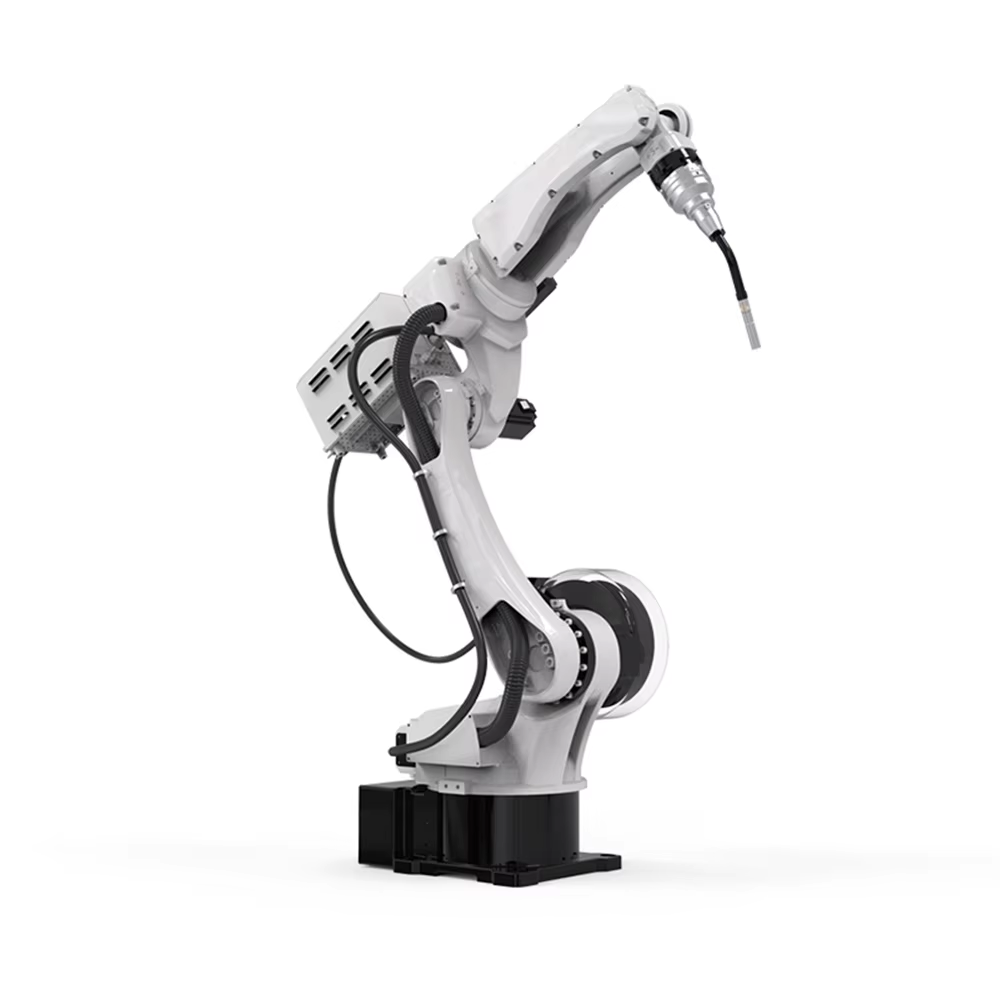
The Evolution of Intelligent Welding And Cutting in Modern Manufacturing
From Traditional to Intelligent Welding: A Technological Shift
Moving away from old school welding techniques toward smart systems represents a game changer for manufacturing shops everywhere. Back when everything was done manually, it all came down to how skilled the welder was. Today's intelligent welding and cutting equipment brings together AI controls with sophisticated sensor arrays that make a big difference. According to a recent study from BPI Applied Engineering, companies that switched to these new systems saw their rework expenses drop by almost 37% because defects get caught right away during production. These sensor enhanced welders can tweak things like heat levels and movement speed automatically, which helps them handle materials that aren't perfectly consistent. Before this tech existed, such inconsistencies were responsible for about 23% of slowdowns in heavy fabrication work, according to research published by Sefaspe last year.
Integration of AI and Advanced Sensors in Welding Automation
Smart welding systems now incorporate machine vision along with force torque sensors so they can literally spot differences in joints and sense how materials resist movement during the process. The information gathered from these sensors gets processed by AI that adjusts welding paths on the fly, resulting in position accuracy down to about half a tenth of a millimeter. This kind of fine control lets car manufacturers join together different types of materials for vehicle frames something traditional welding techniques simply cannot handle because each material expands at its own rate when heated.
Adoption Trends: Intelligent Welding in Tier-1 Automotive Suppliers
When it comes to adopting new tech, Tier-1 automotive suppliers are definitely ahead of the curve. Around two thirds of them have already integrated smart welding techniques into their EV battery tray manufacturing processes as of early 2024. What makes this technology so valuable? Well, it can handle those super thin aluminum sheets measuring 1mm or less while moving at impressive speeds of around 4 meters per minute. This capability tackles some major pain points in making electric vehicles. Take one big name German carmaker for instance they saw their production output jump by nearly 20% after upgrading their body shops with these AI assisted laser welding systems. And what's really interesting is how well this works across different product lines, which is exactly what manufacturers need in today's diverse market landscape.
Unmatched Speed and Precision Through Laser-Based Processes
Laser Welding Speed and Efficiency as a Competitive Advantage
Smart welding and cutting systems can go anywhere from 4 to 5 times quicker than old school TIG or MIG techniques according to recent industrial automation reports. Laser systems specifically run between 40 and 400 inches per minute, pretty impressive stuff for anyone working on large scale manufacturing projects. What makes this possible? Well, these systems deliver energy in such a focused way and work without actually touching the material, which cuts down on heat damage by as much as 85% compared to regular arc welding methods. Some big name manufacturers have seen their production cycles speed up by around 22% after bringing these advanced systems into their automated assembly lines, particularly noticeable in automotive and aerospace applications where precision matters most.
Case Study: Boosting Throughput in EV Battery Manufacturing
A Tier-1 automotive supplier increased battery tray welding throughput by 42% using fiber laser systems. Intelligent monitoring protocols reduced setup times by 67% while maintaining weld penetration consistency (±0.03mm tolerance). The project delivered full ROI in 14 months through reduced scrap rates and energy savings.
Traditional Arc Welding vs. Intelligent Laser Welding: A Comparative Analysis
| Factor | Traditional Arc Welding | Intelligent Laser Welding |
|---|---|---|
| Speed Range | 10–50 inches/minute | 40–400 inches/minute |
| Heat-Affected Zone | 3–8 mm | 0.5–2 mm |
| Repeatability | ±0.15 mm | ±0.03 mm |
| Energy Efficiency | 55–65% | 82–90% |
| Automation Compatibility | Requires frequent torch replacements | Continuous 500+ hour operation |
Data from recent manufacturing analysis shows laser systems enable 19% higher asset utilization in high-mix production environments compared to conventional methods.
Seamless Integration with Full Automation and Robotic Systems
Intelligent Welding and Cutting systems revolutionize manufacturing by bridging advanced laser technologies with fully automated production environments. This integration enables manufacturers to achieve unprecedented operational efficiency while maintaining flexibility across diverse industrial applications.
Integrating Laser Systems into Automated Assembly Lines
Modern laser welding systems achieve <1 mm alignment accuracy through AI-driven vision systems and adaptive path planning. A 2023 Industry 4.0 analysis reveals that manufacturers integrating laser systems with automation software reduce changeover times by 67% compared to manual reprogramming. Key integration steps include:
- Multi-axis robotic arm synchronization with laser power modulation
- Real-time CAD/CAM data exchange between welding controllers and ERP systems
- Automated fixture adjustments using predictive wear algorithms
Robotic Welding and Automation in High-Volume Production
Six-axis robots equipped with intelligent welding heads now complete 1,200 weld points/hour in automotive chassis production – a 300% speed increase over manual operations. Sensor-feedback loops compensate for material variances below 0.5 mm, achieving 99.98% first-pass yield rates in consumer electronics manufacturing.
Strategies for Partnering with Automation Experts
Early adopters following proven automation implementation frameworks report 9-month ROI through phased integration. Critical partnership criteria include:
| Implementation Stage | Key Success Factor | |
|---|---|---|
| Planning | Process digital twin validation | |
| Integration | Unified IIoT protocol adoption | |
| Optimization | AI-powered predictive maintenance |
Cross-industry data shows manufacturers combining strategic partnerships with modular automation architectures reduce system commissioning costs by 41% (Automation World 2023).
Real-Time Quality Control and Process Consistency
Intelligent Welding and Cutting systems transform quality assurance through closed-loop feedback mechanisms. By integrating sensor arrays directly into welding torches, manufacturers achieve micron-level precision across high-volume production runs.
In-Process Monitoring and Quality Traceability in Welding
Embedded sensors track 15+ parameters simultaneously, including thermal profiles and weld pool dynamics. This data generates digital twins for every joint–shifting quality control from post-weld inspections to continuous verification. Production teams can trace metrics back to specific robotic cells or material batches, enhancing accountability and root-cause analysis.
Real-Time Defect Detection Using Sensor Feedback
AI algorithms cross-reference live sensor input against proprietary welding knowledge bases, flagging anomalies like incomplete penetration within 0.8 seconds. This instant detection prevents defect propagation, especially in safety-critical applications such as pressure vessel manufacturing.
Case Study: Reducing Rework by 42% in Heavy Machinery Fabrication
A global construction equipment manufacturer implemented intelligent welding workflows across their crawler crane production lines. Real-time parametric monitoring combined with adaptive laser controls reduced rework rates from 17% to 9.8% within six months (2023 Industry Report). Predictive maintenance alerts also decreased unplanned downtime by 31%.
Safety, Sustainability, and Flexibility for Future-Ready Manufacturing
Benefits of Non-Contact Welding for Workplace Safety
Intelligent welding systems eliminate direct operator exposure to arc flash, molten metal splatter, and toxic fumes through non-contact laser processes. Unlike traditional methods requiring close human proximity, these systems reduce workplace injury risks by 67% according to OSHA 2023 data, while maintaining weld integrity via precise beam control.
Environmental Advantages: Lower Energy Use and Fume Emissions
Laser-based intelligent welding consumes 38% less energy than conventional MIG/MAG processes (Stax Manufacturing Sustainability Report 2023)[^1], with near-zero emission of hazardous ozone or hexavalent chromium. This aligns with global ESG manufacturing initiatives requiring particulate emissions below 0.1 mg/m³–a threshold consistently met through closed-loop fume extraction in intelligent systems.
Customization and Flexible Automation for Diverse Product Lines
Modular intelligent welding configurations enable rapid changeovers between medical device micro-welding (0.2 mm seam widths) and heavy eMobility battery tray assembly within the same production cell. As highlighted in recent industry automation analyses, manufacturers using adaptable systems reduced retooling costs by 53% when scaling production across hybrid product batches.
Application Spotlight: Intelligent Welding in Medical Devices and eMobility
Precision-focused medical OEMs leverage intelligent welding for hermetic seals in MRI components requiring <10 µm positional accuracy, while EV makers utilize high-speed galvanometer scanners to join 2,400 battery cell tabs/hour–four times the throughput of resistance welding methods.
FAQ
What are the primary benefits of using intelligent welding systems over traditional methods?
Intelligent welding systems offer numerous benefits over traditional methods, including increased precision, reduced rework and scrap rates, and enhanced energy efficiency. They also provide real-time defect detection, leading to better quality control in production runs.
How do intelligent welding systems contribute to sustainability initiatives?
These systems are environmentally friendly, using up to 38% less energy than traditional methods and emitting fewer harmful fumes and particulates, thereby aligning with global ESG initiatives.
In what industries are intelligent welding and cutting systems most commonly adopted?
They are widely adopted in automotive, aerospace, medical device manufacturing, and heavy machinery industries due to their precision, speed, and ability to handle diverse and complex welding tasks.
What factors should be considered when integrating automation into production lines?
Key factors include choosing a system that offers extensive automation compatibility, real-time monitoring, and the ability to manage material variances through intelligent feedback loops. Partnering with automation experts can also streamline integration and reduce costs.
Table of Contents
- The Evolution of Intelligent Welding And Cutting in Modern Manufacturing
- Unmatched Speed and Precision Through Laser-Based Processes
- Seamless Integration with Full Automation and Robotic Systems
- Real-Time Quality Control and Process Consistency
- Safety, Sustainability, and Flexibility for Future-Ready Manufacturing
- FAQ