
 EN
EN
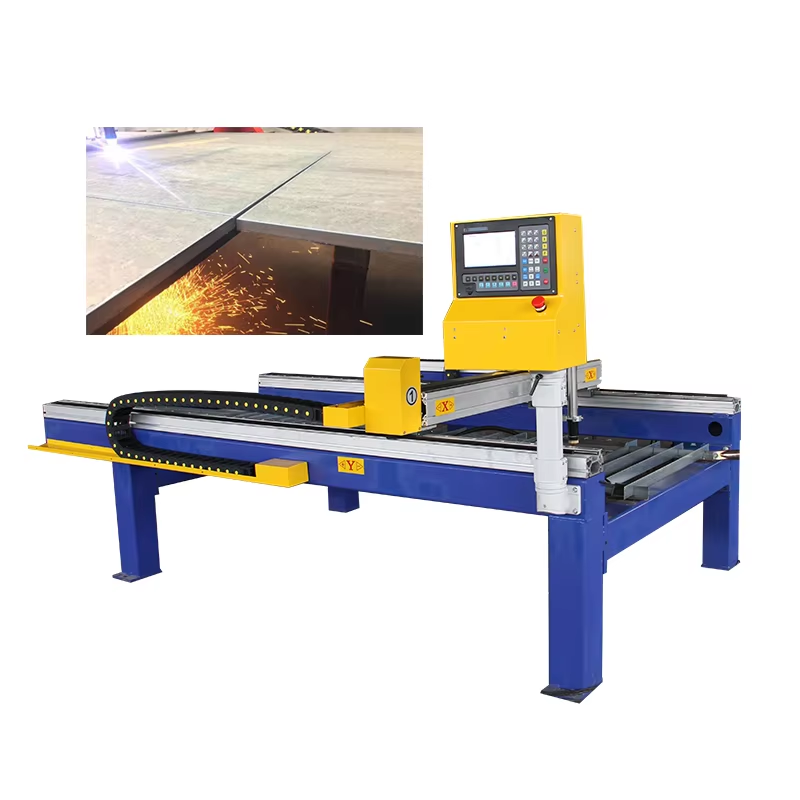
Understanding Intelligent Welding And Cutting Technologies
Defining Intelligent Welding And Cutting Technologies
Smart welding and cutting tech now combines AI, IoT sensors, and robots to take over what used to be done by hand in fabrication shops. The systems run on smart algorithms that keep track of things like heat levels and how joints line up while working, getting down to tolerances under half a millimeter. According to industry research from around 2020, these advances tackle the problems that come with relying on human welders who might make mistakes or have variations between jobs. What this means for manufacturers is consistent quality throughout production runs, something that's becoming essential across multiple sectors where product reliability matters most.
Integration of AI and Intelligent Systems in Welding Enhances Process Control
Modern machine learning techniques are making big improvements in welding processes. These smart algorithms can figure out the best weld paths while spotting tiny defects at the micron level through infrared imaging and special sensor readings. The real magic happens when AI takes over during actual welding operations. Systems automatically tweak settings as they go, which cuts down those annoying porosity issues and spatter problems by almost half compared to what we saw back in 2023 according to industry standards. What's really impressive is how stable these automated systems stay. Even when conditions change constantly, they keep the welding arc steady around 99 times out of 100. That means factories don't need to spend so much time checking every weld after it's done.
Evolution from Manual to AI-Driven Welding Automation Efficiency
The shift from manual to intelligent welding follows three stages:
- Fixed automation (1980s–2000s): Programmable logic controllers executing pre-defined routines
- Sensor-assisted systems (2010s): Limited adaptive capabilities using basic feedback mechanisms
- Cognitive welding platforms (2020s): Neural networks that self-optimize weld parameters using historical performance data
Modern AI-driven systems achieve 40% faster setup times and 98% first-pass accuracy in automotive frame production, effectively addressing skilled labor shortages.
Labor and Operational Cost Reduction Through Automation
Labor Cost Reduction Through Automation as a Primary Driver for Adoption
Smart welding and cutting tech saves money on labor because it handles those boring repeat jobs without needing so much hands-on work from people. According to some research from last year, factories that switched to robots for welding saw their labor bills drop around 30% when compared to doing everything manually. What's even better? These automated systems cut down on fixing mistakes made by humans, saving about two thirds of the time usually wasted there. That frees up experienced workers to focus on things like checking quality standards and tweaking processes to make them run smoother overall.
Comparative Analysis: Manual Welders vs. Robotic Welding Systems
Modern robotic welding systems outperform manual welders in speed, consistency, and cost efficiency:
| Metric | Manual Welding | Robotic System |
|---|---|---|
| Average hourly output | 8 welds | 24 welds |
| Defect rate | 4.2% | 0.8% |
| Operating cost/hr | $42 | $18 |
Robotic systems operate 50% faster with tighter arc voltage control (±1.5% variance vs. ±8% manually), reducing post-weld grinding labor by 37% in bridge construction projects.
Reduced Labor Costs Using Automated Welding Systems in High-Volume Production
Manufacturers producing large volumes typically experience substantial savings on labor costs. For instance, many automotive parts suppliers have slashed staffing at welding stations down from needing 12 workers per shift to just 3 since implementing automated solutions. Take one particular company making engine components as an example they managed to save around $280k each year on overtime pay after introducing these flexible robotic systems that can run for almost 22 hours straight. The real game changer here is how these automated setups allow for nearly constant production while requiring only about 17% of the shift changes needed when everything was done manually.
Workforce Redeployment Strategies Post-Automation
Forward-thinking companies reinvest labor savings into upskilling programs, transitioning 68% of displaced welders into roles like robotic cell supervision and predictive maintenance planning. A 2023 automation case study demonstrated how redeployed technicians improved overall equipment effectiveness (OEE) by 19% through real-time monitoring—enhancing returns when implementing intelligent welding technologies.
Improving Material Utilization and Minimizing Waste
Material Utilization and Waste Reduction in Automated Welding Improves Yield
Intelligent welding and cutting systems improve material utilization by 12–18% over manual methods through real-time sensor monitoring and adaptive control. By analyzing joint geometries and material properties, they optimize filler metal deposition while maintaining AWS-compliant weld integrity—particularly valuable when working with high-cost aerospace alloys or pressure vessel steels.
Precision Cutting and Adaptive Arc Control Minimize Scrap
AI-driven welding torches automatically adjust travel speed (15–35 mm/s) and amperage (±7%) based on workpiece variations detected via laser vision systems. This prevents over-welding, which accounts for 29% of consumables waste in manual pipe welding according to Fabricators & Manufacturers Association data.
Case Study: 23% Reduction in Material Waste After AI Integration
A Tier 1 automotive supplier achieved $2.7M in annual savings after deploying intelligent welding across 47 robotic workcells. According to an SME Journal (2022) study, predictive gap-fill algorithms reduced weld metal overspill by 19 metric tons/year while sustaining a 99.4% first-pass yield—resulting in 23% less material waste versus their prior semi-automated setup.
Key Achievements Through Intelligent Systems Implementation:
| Metric | Manual Process | Automated Process | Improvement |
|---|---|---|---|
| Filler Metal Consumption | 18 kg/unit | 13.8 kg/unit | 23.3% |
| Cut-to-Weld Time | 42 minutes | 29 minutes | 31% |
| Material Certification Failures | 6.2% | 1.1% | 82% |
Enhancing Productivity and Reducing Defects with AI
Robotic Welding Systems Increase Productivity and Reduce Lead Times
Intelligent welding and cutting systems equipped with robotics operate 2–3 times faster than manual welders while maintaining ±0.2 mm precision. In high-volume production, this eliminates bottlenecks—automotive manufacturers reduced assembly line lead times by 37% in 2023 through uninterrupted operation.
Welding Automation and Productivity: Measuring Output Gains
Automation delivers measurable improvements in throughput and reliability:
| Manual Welding | AI-Driven Systems |
|---|---|
| 15–20 welds/hour | 55–70 welds/hour |
| 8–12% rework rate | 1.4–2.1% rework rate |
| 85% uptime | 98% uptime |
These gains stem from adaptive path planning algorithms that dynamically optimize welding sequences.
AI-Driven Welding Lowers Rework and Warranty Costs
A 2025 automotive case study showed convolutional neural networks detecting microscopic weld defects with 99.1% accuracy—surpassing the 88% detection rate of human inspectors. This capability reduced warranty claims by $2.7M annually.
Reduction of Rework and Defects Using AI Via Predictive Analytics
Thermal imaging sensors paired with machine learning predict weld pool irregularities 0.8 seconds before defects form—73% faster than human response times. In a 2024 aerospace manufacturing trial, this proactive approach slashed scrap metal costs by 41%, with self-learning algorithms continuously refining tolerance thresholds.
Cost-Benefit Analysis and Long-Term ROI of Intelligent Systems
Cost-Benefit Analysis of Automated Welding Equipment Over 5-Year Lifecycle
Intelligent welding and cutting systems require upfront investments averaging $280k–$550k, covering equipment, integration, sensors, robotic arms, and AI controllers. However, a 5-year analysis reveals substantial returns:
- Labor savings: $140k–$220k/year in mid-volume production
- Material optimization: 18–24% reduction in waste
- Rework avoidance: $45k–$90k/year in avoided warranty claims
A 2024 industry analysis found manufacturers recover automation costs within 26–34 months through these efficiencies.
Long-Term Cost Savings and ROI in Welding Automation for Mid-Sized Manufacturers
Mid-sized fabrication shops implementing intelligent systems report:
| Metric | Manual Process | Automated System |
|---|---|---|
| Annual throughput | 8,200 units | 12,500 units |
| Defect rate | 4.7% | 1.2% |
| Overtime expenses | $18k/month | $4k/month |
These gains support 27–33% ROI over five years. Predictive maintenance algorithms further extend equipment lifespan by 3–5 years, amplifying long-term value.
Total Cost of Ownership: Maintenance, Training, and Integration Expenses
While initial hardware costs account for 55–60% of total ownership, ongoing expenses include:
- AI software licensing: $12k–$25k/year
- Cross-training programs: $3k–$5k/operator
- Sensor recalibration: 120–180 annual hours at $95–$145/hour
Operators using IoT-enabled monitoring reduce these costs by 19–22% through data-driven maintenance scheduling.
Data Point: 40% Decrease in Rework Rates Reported by Automotive Fabricators (AWS, 2023)
The American Welding Society's 2023 benchmark confirmed automated systems lower rework costs by $38–$72 per vehicle in chassis production through millimeter-accurate seam tracking—a critical advantage as automakers face $16k–$22k/unit penalties for delayed EV battery tray deliveries.
FAQ
What is intelligent welding technology?
Intelligent welding technology uses AI, IoT sensors, and robotics to enhance welding processes, ensuring precision and consistent quality.
How does AI improve welding processes?
AI in welding can predict and detect defects, automatically adjust settings for optimal results, and minimize human error, leading to more consistent and reliable welds.
What are the cost benefits of using intelligent welding systems?
These systems can significantly reduce labor and operational costs, improve material utilization, and enhance overall production efficiency, offering substantial long-term ROI.
How does automation impact labor in welding?
Automation reduces the need for manual labor in repetitive tasks, allowing human workers to focus on quality control and process optimization.
Table of Contents
- Understanding Intelligent Welding And Cutting Technologies
- Labor and Operational Cost Reduction Through Automation
- Improving Material Utilization and Minimizing Waste
- Enhancing Productivity and Reducing Defects with AI
-
Cost-Benefit Analysis and Long-Term ROI of Intelligent Systems
- Cost-Benefit Analysis of Automated Welding Equipment Over 5-Year Lifecycle
- Long-Term Cost Savings and ROI in Welding Automation for Mid-Sized Manufacturers
- Total Cost of Ownership: Maintenance, Training, and Integration Expenses
- Data Point: 40% Decrease in Rework Rates Reported by Automotive Fabricators (AWS, 2023)
- FAQ