
 EN
EN
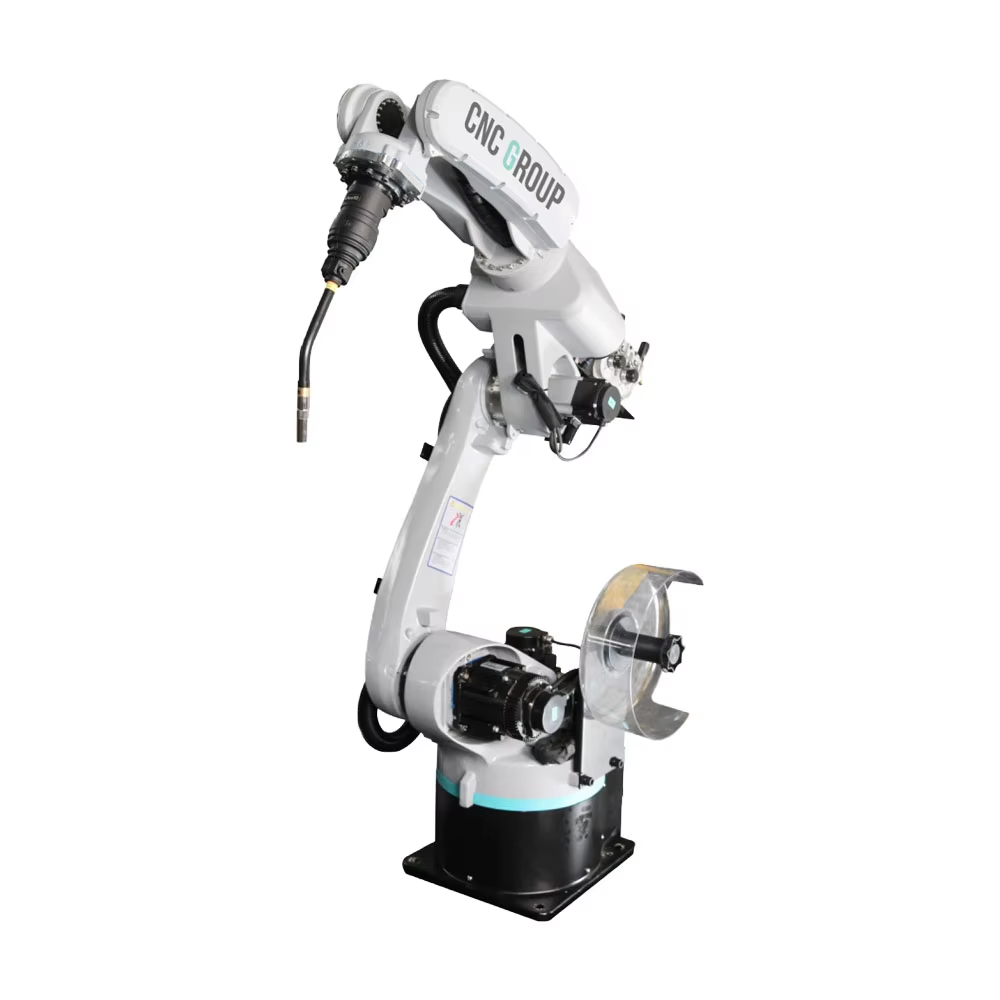
Automotive robotic welding places a six-axis articulated robot at the heart of a body-in-white cell, running MIG or spot welds with a consistency that manual booths cannot match. A stamping plant in the U.S. Midwest turned three manual stations into a single automotive robotic welding cell and watched its Tuesday-night rework pile shrink from a floor cart to a small tray. The change was not about removing people; it was about holding joint geometry across thousands of repeats without fatigue.
What Automotive Robotic Welding Looks Like on a Real Line
From Manual Booths to a Single Welding Cell
The plant built door hinges and subframes in low batches, with operators at fixtures for up to six hours a shift. Quality swung with the person on the gun. Automotive robotic welding entered as a compact cell: a floor-mounted arm, a two-station turntable, and a push-pull wire feeder. Cycle time per part fell from about nine minutes to under four, and the same two workers moved to loading, inspection, and program tweaks instead of the torch. Automotive robotic welding also shortened changeovers: the turntable let one side load while the other welded, so the cell never sat idle waiting for a fixture to clear.
A Body-in-White Trial That Cut Rework
A trial at a body-in-white line in northern Mexico compared ten hand-welded subframes with ten made by automotive robotic welding on the same fixture. Destructive peel tests showed the robotic set held penetration within a 0.4 mm band, while the manual set varied by more than 1.5 mm between the strongest and weakest joint. Automotive robotic welding also recorded each schedule to the line historian, giving quality a searchable record when a customer audit arrived weeks later. That tighter band lets downstream assembly skip the per-part touch-up that previously ate an hour each morning.
Why Manual Welding Stalls at Automotive Volume
Fume and Ergonomic Exposure Behind the Gun
Manual welding pushes flux fumes and UV into the operator's breathing zone for the whole shift. OSHA 29 CFR 1910.252 sets ventilation and exposure expectations for welding, and sustained manual work forces costly extraction and rotation. Automotive robotic welding moves the arc behind a fixed hood and a fume arm, so the loader works from the side instead of leaning into the plume. NFPA 79 also guides the cell's electrical design so the cabinet and torch circuits stay isolated from the guard circuit.
Inconsistent Penetration Raises Scrap
A joint that looks sound can hide shallow fusion. At automotive volumes, even a two-percent weak-joint rate becomes hundreds of suspect assemblies a week. Automotive robotic welding keeps arc voltage, wire feed, and travel speed locked to the program, so the same joint forms the same way on part one and part five thousand. Automotive robotic welding turns that risk into a logged parameter, because the cell flags a dip in arc current before a bad joint ever leaves the fixture. The result is fewer scrapped subframes and fewer field complaints traced back to the weld.
How the Weld Stays Consistent
Path Repeatability and Adaptive Seam Tracking
A modern arm repeats its tool-center-point path within about ±0.05 mm through closed-loop servo drives and resolver feedback. Automotive robotic welding uses that precision to lay the same weave every time, so fixture tolerance—not the robot—becomes the quality limit. Through-arc seam tracking reads arc voltage to find the joint, while laser tracking handles wider gaps; pulsed MIG cools the puddle between pulses to trim spatter on thin galvanized panels, and automotive robotic welding corrects the path on the fly when a stamped edge drifts. Offline programming lets automotive robotic welding rehearse a new part on a virtual cell, so the first physical part already lands near the target path instead of burning a dozen prototypes.
ISO 3834, AWS D1.1 and Robot Safety Rules
ISO 3834 sets fusion-welding quality requirements covering procedure qualification and traceability that automotive suppliers expect. AWS D1.1 and D1.3 guide structural and sheet-steel acceptance, and a cell documents every weld schedule for audit. ANSI/RIA R15.06-2012 aligns with ISO 10218 on robot safety, requiring risk assessment, guarding, and controlled stops. A compliant automotive robotic welding cell pairs light curtains with locked torch circuits so maintenance never surprises an operator.
Selecting, Running and Maintaining the Cell
How to Select a Cell That Fits the Part
Match the robot reach to the largest fixture diagonal, not the average part, and size payload for the torch plus cable dress. Automotive robotic welding pays off when the integrator proves the weld schedule on the actual material stack before delivery. A well-specified automotive robotic welding cell ships with a first-article report and a spare torch liner plan, and the controller logs alarms so process drift shows up in data rather than in scrap. Automotive robotic welding should also arrive with a documented torch angle and a reach margin of at least 50 mm, because a cell that just touches its limit wears dress faster and drifts sooner.
Daily Checks and Preventive Maintenance
Operators should verify gas flow, wire feed tension, and nozzle condition at shift start, and clear spatter from the tip before it builds. Automotive robotic welding needs a monthly check of robot calibration, dress wear, and ground clamp resistance, since a poor ground is the quiet cause of arc instability. Keep a consumables kit on the line and log every torch change so mean time between failures stays predictable across the production week. Automotive robotic welding rewards a simple board: when the tip, liner, and contact tip are logged with part counts, a worn consumable gets changed on schedule instead of after a spatter storm.
Frequently Asked Questions
What benefits does automotive robotic welding bring to a plant?
Automotive robotic welding lifts repeatability and throughput while pulling people out of the fume plume. Cycle times drop, penetration stays inside a tight band, and certified-welder scarcity stops capping output. The cell runs extra shifts from the same program, so volume scales without adding gun-certified staff or nightly rework carts on the floor.
Can robotic welding fully replace manual welders?
Automotive robotic welding replaces the repetitive gun work, not the judgment. People still load fixtures, program paths, and inspect first articles. Small, low-volume, or heavily reworked parts may stay manual because fixturing cost outweighs the gain. A mixed line usually beats an all-or-nothing swap for job shops and prototype runs.
Which standards apply to an automotive welding robot cell?
ISO 3834 covers weld quality systems, AWS D1.1 and D1.3 cover steel acceptance, and ANSI/RIA R15.06 with ISO 10218 cover robot safety. OSHA 29 CFR 1910.252 adds welding ventilation and fire rules, while NFPA 79 guides electrical design. Compliance starts with a written risk assessment, not just a perimeter fence around the cell.
How should a buyer size a robotic welding cell?
Size robot reach to the largest fixture diagonal and payload for torch plus dress. Demand a prove-out on the real material stack and a first-article report before acceptance. Confirm alarm logging, spare liner availability, and integrator support response time, because uptime depends on those details more than on a spec-sheet payload number alone.
What maintenance keeps a welding robot reliable?
Check gas flow, wire feed tension, and nozzle at shift start; clear spatter early. Monthly, verify robot calibration, dress wear, and ground clamp resistance. Keep consumables on the line and log every torch change. A poor ground is the most common silent cause of arc instability and should sit on the weekly checklist without fail.
Do collaborative robots handle automotive robotic welding safely?
Force-limited cobots weld lighter gauges at lower speed and may skip rigid fences inside an assessed zone. For high-volume body-in-white, a guarded industrial cell still leads on speed. Choose the format by part weight, cycle, and risk assessment rather than by trend, and document the collaborative boundary clearly for every shift.