
 EN
EN
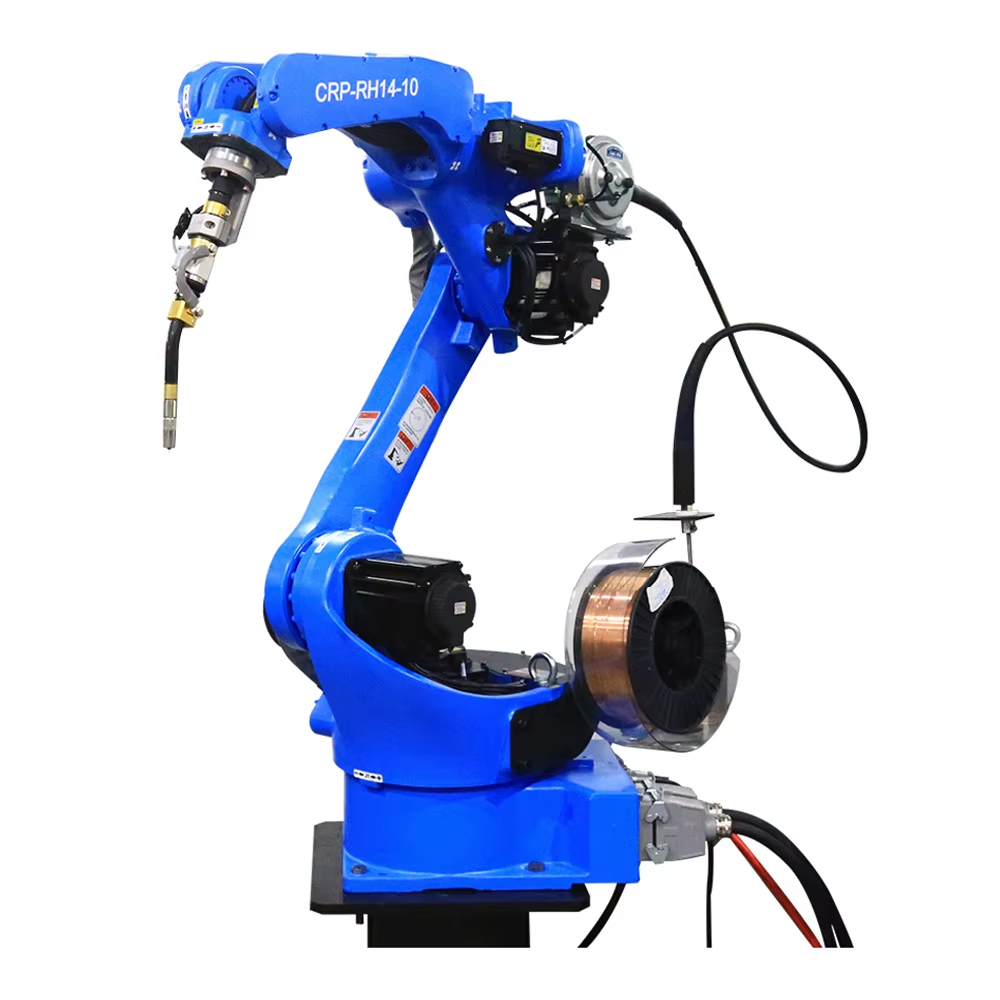
Understanding Welding Cobots: Future of Fabrication
A welding cobot brings robot-grade repeatability to a bench that a person shares, using force-limited joints instead of a caged cell. A fabrication shop in southern Germany set a six-axis collaborative arm beside its manual MIG bench, and a welding cobot took the long, steady seams while the operator handled fixtures and short touches. A welding cobot fits where a guarded cell never will, because the force limit is built into the joints, which is exactly why smaller shops adopt the format.
A Job Shop Adds Its First Welding Cobot
From a Single MIG Gun to a Shared Cell
The shop ran aluminium enclosures in batches of twenty to fifty, and one certified welder capped output. A welding cobot arrived on a wheeled pedestal with a push-pull torch and a simple teach pendant. The operator hand-guided the arm through the first seam, the controller stored the path, and the welding cobot then repeated it while the person tacked the next part. Throughput rose without adding a second certified gun hand, and a welding cobot that shares the bench let the shop quote faster turnaround on repeat work. A welding cobot also kept the operator upstream of the fume, since the arm held the gun while the person stood clear during the long seam.
A Short-Run Bracket Order That Paid Back Fast
A customer ordered three hundred stainless brackets with a long fillet that tired the wrist by part ten. The welding cobot ran those seams at a steady pace and never slowed in the afternoon. Because the shop billed on a fixed quote, the steadier cycle protected margin, and the owner traced the arm's cost against that single order. A welding cobot rarely wins on one huge run; it wins on the pile of small, repetitive jobs a shop used to dread.
Where Manual and Guarded Cells Fall Short
Pinch Points and Collision Risk in Tight Bays
Manual welding in a cramped bay puts the operator close to hot metal and moving parts all shift. A traditional industrial cell answers that with a fence and light curtain, but many shops lack the floor space or the volume to justify the guard. A welding cobot is built for shared space: its joints stop on contact, so a person who bumps the arm halts the motion instead of getting pinned, and a welding cobot removes the fence debate on jobs that change weekly.
Floor Space and Fence Cost on Small Jobs
A guarded cell needs a safety perimeter, a controlled stop system, and usually a dedicated footprint that sits empty between campaigns. For a shop that changes parts weekly, that capital sits idle. A welding cobot rolls to the work, plugs into clean power, and joins the existing bench, which keeps the bay flexible and the spend proportional to the actual job mix rather than to a guard that earns nothing between runs. A welding cobot therefore fits a shop that rents space by the square meter, because the same floor serves manual and robotic work in the same shift.
How a Welding Cobot Stays Safe and Precise
Power-and-Force Limiting Under ISO/TS 15066
ISO/TS 15066 defines the collaborative workspace and the force-and-speed limits that let a robot work next to people without a fence. A welding cobot uses power-and-force-limiting joints that cut torque the instant a contact exceeds the assessed threshold. A welding cobot that meets ISO/TS 15066 still logs every stop event for the risk file, because the standard requires a documented assessment, and the weld arc, fumes, and hot tip remain hazards the speed limit does not remove.
Hand-Guiding and Easy Path Teaching
A welding cobot is taught by moving the arm, not by typing coordinates. The operator holds a grip, drags the torch along the seam, and the path is saved with the welding parameters attached. That short loop means a new part is running within minutes, and a welding cobot suits shops where the next job is never the same as the last one. A welding cobot turns a new hire into a productive operator in an afternoon, since torch angle and travel speed are set per seam, then locked for repeat runs. A welding cobot also stores several seam programs, so a bracket and an enclosure can share one arm with a tap to swap the saved path.
Choosing, Checking and Caring for a Welding Cobot
How to Match Payload and Reach to the Part
Size the arm for the torch, cable dress, and the part's worst-case moment, not the catalog payload. A welding cobot should keep reserve at full reach so the seam does not wander as the arm extends. Confirm the controller speaks the same fieldbus as the existing feeder, and ask the supplier for a prove-out on the real alloy, because thin gauge and reflective metal behave differently than mild steel, and a welding cobot should arrive with a documented torch angle to protect that reserve.
Commissioning Checks and Routine Care
At commissioning, verify the collaborative speed-and-separation setting against the risk assessment, and test that the arm stops on a light push. A welding cobot needs the nozzle, liner, and contact tip checked each shift, plus a monthly calibration check so the taught path still matches the real one. Log torch hours and keep a consumables kit nearby; a welding cobot that drops a slap of spatter mid-seam is usually a tip that should have been changed earlier, and a welding cobot rewards a simple log of those changes. A welding cobot should also get a yearly torque check on its mounting base, because a loose pedestal is the quiet source of seam drift that calibration alone will not fix.
Frequently Asked Questions
What is a welding cobot and how does it differ from an industrial robot?
A welding cobot is a force-limited collaborative arm built to share a bench with people, while an industrial robot welds inside a guarded cell. The cobot stops on contact and is taught by hand-guiding, which suits short runs. The industrial cell wins on speed and duty for high-volume, repeat parts where a fence pays for itself.
Is a welding cobot safe without a safety fence?
A welding cobot can work without a rigid fence inside an assessed collaborative zone under ISO/TS 15066, because its joints limit force on contact. The arc, fumes, and hot tip remain hazards, so local extraction and clear hot-zone marking still apply. A written risk assessment defines the exact boundary and the permitted speed.
Which standards govern collaborative welding robots?
ISO/TS 15066 covers collaborative operation and force limits, ANSI/RIA R15.06 with ISO 10218 covers robot safety, and OSHA 29 CFR 1910.252 adds welding ventilation and fire rules. Compliance starts with a risk assessment, not with removing the fence, because the weld process hazards stay present even at low speed.
How much payload does a welding cobot need?
Size payload for the torch, cable dress, and the part's worst-case moment at full reach, keeping reserve so the seam stays accurate. Thin or reflective alloy may need a slower, lower-force setting that eats into the duty cycle. A prove-out on the real material confirms the chosen arm before purchase and avoids a return.
Can a welding cobot handle aluminium and stainless?
A welding cobot runs aluminium and stainless with the right torch, push-pull feeder, and shielding gas, taught by hand-guiding the seam. Reflective and thin stock need tuned parameters and clean prep, since contamination causes porosity. The arm repeats the saved path, so consistency depends on the first taught weld being correct.
What maintenance keeps a welding cobot accurate?
Check the nozzle, liner, and contact tip each shift and clear spatter early. Run a monthly calibration check so the taught path still matches reality, and log torch hours against a consumables kit. A welding cobot that drifts mid-seam usually signals a worn tip or a ground clamp with rising resistance that should have been caught sooner.