
 EN
EN
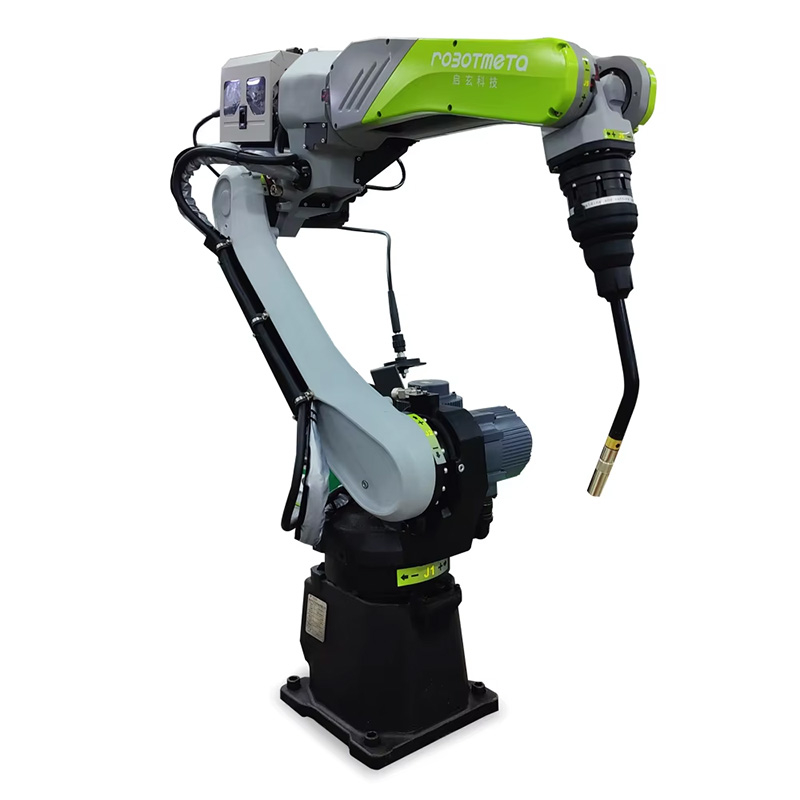
Integrating Welding Robots into Existing Manufacturing Workflows
Overcoming Challenges in Welding Automation and Human-Robot Collaboration
Factories today run into three big problems when trying to get welding robots up and running. First comes the headache of updating old equipment, which eats up about 45% of the total cost. Then there's the matter of teaching experienced welders new tricks so they can oversee operations instead of doing all the work themselves. And finally, setting up areas where humans and machines can safely coexist remains a challenge. According to a study from Deloitte back in 2022, around two thirds of companies that adopted collaborative robots saw their welding mistakes drop by nearly 30%. They achieved this mainly thanks to those fancy real time position tracking systems. What works best seems to be mixing traditional workspaces with modern tech solutions. Some plants install laser curtains for safety, others keep the wisdom of seasoned welders alive through special programming software. And many rely on cloud systems to maintain consistent quality across different shifts without anyone losing track of what needs fixing.
Seamless Synchronization Between Robots and Legacy Systems
Compatibility challenges decrease production uptime by 18% during robotic integration phases (McKinsey 2023). Successful implementations use open-architecture controllers that translate legacy PLC commands into robotic paths, achieving 99.6% signal accuracy. Key synchronization metrics:
| System Component | Pre-Integration Error Rate | Post-Integration Error Rate |
|---|---|---|
| Weld Path Alignment | 3.2mm | 0.05mm |
| Torch Angle Consistency | ±8° | ±0.3° |
| Speed Variance | 12% | 1.7% |
Case Study: Automotive Parts Manufacturer Reduces Cycle Time by 35%
One major automotive parts manufacturer managed to cut their subframe welding cycle time down to just 22 seconds by implementing robots in stages over several months. At first, they concentrated on getting those tricky TIG weld patterns right with some pretty advanced teaching methods for robot paths. After fine tuning everything, they saw some impressive improvements. Their weld quality jumped from 68% to 91% on the first try, which means fewer reworks and wasted materials. The company actually recouped their investment in about 4 months thanks to all that scrap savings. Plus, workers started getting involved in learning new skills at a 15% higher rate than before, showing how this tech adoption can benefit people as well as bottom lines.
Boosting Productivity and Efficiency with Welding Robots
Maximizing Throughput and Minimizing Idle Time
Welding robots can work around the clock without needing rest periods or shift rotations, something humans simply cannot match. According to industry reports, automated welding setups cut down on downtime by roughly 60 percent when compared to traditional methods where workers handle tool swaps and materials manually. These robotic systems really shine when connected properly to conveyor belts and automatic part feeders, which helps keep everything moving smoothly without creating those annoying production bottlenecks. Take one major car parts manufacturer as an example they slashed their cycle times by almost half once they installed specialized robotic cells that could align parts and track seams at the same time. The result? Twice as much output from the same factory floor space, making room for other operations elsewhere in the plant.
Real-Time Monitoring and Adaptive Control for Optimal Performance
Modern welding robots equipped with IoT sensors and machine learning can adjust themselves on the fly, tweaking things like arc voltage, wire feed speed, and where they position the joint when conditions change. Some field tests have found that this kind of adaptive control cuts down on spatter problems which means less rework needed about 38% less actually according to Zhouxiang Group's 2024 report. And not only that, but the deposition rate goes up around 22%. The predictive maintenance features are pretty cool too. They look at how motors vibrate and check nozzle wear so service can happen during regular maintenance windows instead of waiting for something to break down. Factory owners know all too well what happens when equipment fails unexpectedly those unplanned stops can cost roughly $260k every single hour as Ponemon Institute noted back in 2023. When these technologies work together, manufacturers see real improvements in their bottom line whether they're running small batch productions or large scale operations.
Ensuring Consistent Weld Quality Through Robotic Automation
Eliminating Variability with Automated Welding Processes
Modern welding robots follow programmed routes with around 0.04 mm accuracy, which cuts down on those pesky errors humans make when tired or their technique varies. These machines come equipped with smart features for tracking seams and adjusting parameters automatically, so they keep things running smoothly even after many hours of work. Factories that have adopted this technology report almost perfect results for weld placement at about 99.8% consistency. This translates to real savings too – roughly $18 less per item made compared to traditional hand welding techniques. A recent study from 2023 looking at automation trends backs up these findings across multiple manufacturing sectors.
Feedback-Driven Optimization for Higher Precision
Monitoring systems track what happens during welding in real time, looking at how the molten metal behaves and how deep it penetrates into the workpiece. These systems can make incredibly fast adjustments within fractions of a millisecond to account for differences between materials being welded together. The machine learning algorithms behind these systems have been fed lots of past welding data so they know what good looks like when it comes to wire feed speeds and gas flow settings. In tests with aircraft components, this approach actually boosted the strength of welded joints by around 30 something percent. What makes all this work so well is the feedback loop built into the process. Even when robots are moving along multiple axes at once, the positioning stays spot on within about half a millimeter. This means manufacturers get consistent quality from their welds no matter if there are temperature changes or other conditions affecting the workshop environment.
Addressing the Industry Paradox: Skilled Labor Shortages vs. High Defect Rates
With 78% of manufacturers reporting welding staff shortages (WFG 2023), robotic systems help bridge the skills gap by replicating expert techniques with 0.5° torch angle precision. Automated cells reduce defect rates by 40% while operating effectively with 30% fewer specialized welders, resolving the quality-cost paradox through repeatable, data-driven execution.
Enhancing Workplace Safety and Optimizing Labor Allocation
Reducing Hazards with Welding Robot Automation
Robots take over those dangerous jobs inside sealed off work areas, which means workers aren't exposed to things like arc flashes, harmful fumes, or the kind of repetitive motions that lead to injuries over time. According to recent data from OSHA in 2023, places that have switched to robotic welding systems saw around half fewer workplace injuries compared to before. These machines come equipped with several safety features right out of the box. There's built in fume extraction systems that suck away all the bad stuff, collision sensors that stop accidents before they happen, and really precise torch controls. The heat risks get managed because sparks stay contained most of the time. And let's not forget about ergonomics either. Workers no longer have to struggle with lifting heavy parts all day long since automated positioners do that job instead.
Redirecting Human Workers to Higher-Value Tasks
When manufacturers automate those dangerous welding jobs, they end up freeing up about 73% of what used to be spent on welding labor for other important tasks like quality checks, process improvements, and keeping equipment running smoothly according to recent industry research from 2024. The change cuts down on expensive overtime work by around 31%. Plus robots collect data that helps spot problems quicker than before. Companies also find it easier to train workers in different areas which keeps people around longer too – employee retention goes up roughly 28% after these changes happen. Workers still need to watch over things closely during complicated assembly processes though, because some level of human judgment just can't be replaced yet.
Evaluating ROI and Long-Term Impact of Welding Robot Implementation
Calculating Return on Investment in Robotic Welding Systems
Welding robots typically deliver ROI within 6—24 months for high-volume applications, driven by labor cost reductions of up to 35% (Stainless Steel World 2025). A comprehensive ROI assessment includes:
- Initial investment: $80,000—$150,000 for the robot system, plus jigs and safety retrofits
- Operational savings: 15—30% less material waste and 50% faster cycle times in repetitive tasks
- Long-term benefits: 12—18% lower energy consumption per weld due to precision control, with robot lifespans of 10—15 years ensuring sustained returns
Automotive parts producers often achieve full payback within 18 months by replacing three-shift manual operations with two collaborative robots.
Cost, Scalability, and Applications Across Manufacturing Industries
Modular robotic systems now allow phased adoption—starting with automating 20% of welds and scaling to 80% as processes mature—making automation accessible to smaller shops. Fastest adoption is seen in:
| Industry | Typical ROI Period | Key Driver |
|---|---|---|
| Automotive | 12—18 months | High-volume spot welding demands |
| Heavy machinery | 18—24 months | Complex weld seam requirements |
| Aerospace | 24—36 months | Ultra-low defect rate mandates |
Advances in offline programming tools—compatible with 92% of legacy systems—have cut deployment costs by 40% (Cobot Systems 2024), expanding robotic welding viability to custom fabricators producing fewer than 500 units annually.
Frequently Asked Questions (FAQs)
What are the main challenges of integrating welding robots into existing workflows?
The primary challenges include updating legacy equipment, training skilled welders to oversee robotic operations, and creating safe collaborative environments for humans and machines.
How do welding robots improve productivity?
Welding robots improve productivity by reducing downtime, maximizing throughput, and eliminating idle time. They work continuously and efficiently, unlike human workers.
What are the safety benefits of using welding robots?
Welding robots reduce hazards like exposure to harmful fumes and repetitive motion injuries by handling dangerous tasks. They also feature built-in safety systems to prevent collisions and manage heat risks.
How can manufacturers ensure consistent weld quality with robotic automation?
Robotic automation improves weld consistency through precision programming and real-time monitoring, offering higher precision and eliminating variability.
How quickly can manufacturers expect ROI from welding robot implementation?
Manufacturers often see an ROI within 6 to 24 months, with significant labor cost savings and reduced material waste contributing to financial benefits.
Table of Contents
- Integrating Welding Robots into Existing Manufacturing Workflows
- Boosting Productivity and Efficiency with Welding Robots
- Ensuring Consistent Weld Quality Through Robotic Automation
- Enhancing Workplace Safety and Optimizing Labor Allocation
- Evaluating ROI and Long-Term Impact of Welding Robot Implementation
-
Frequently Asked Questions (FAQs)
- What are the main challenges of integrating welding robots into existing workflows?
- How do welding robots improve productivity?
- What are the safety benefits of using welding robots?
- How can manufacturers ensure consistent weld quality with robotic automation?
- How quickly can manufacturers expect ROI from welding robot implementation?