
 EN
EN
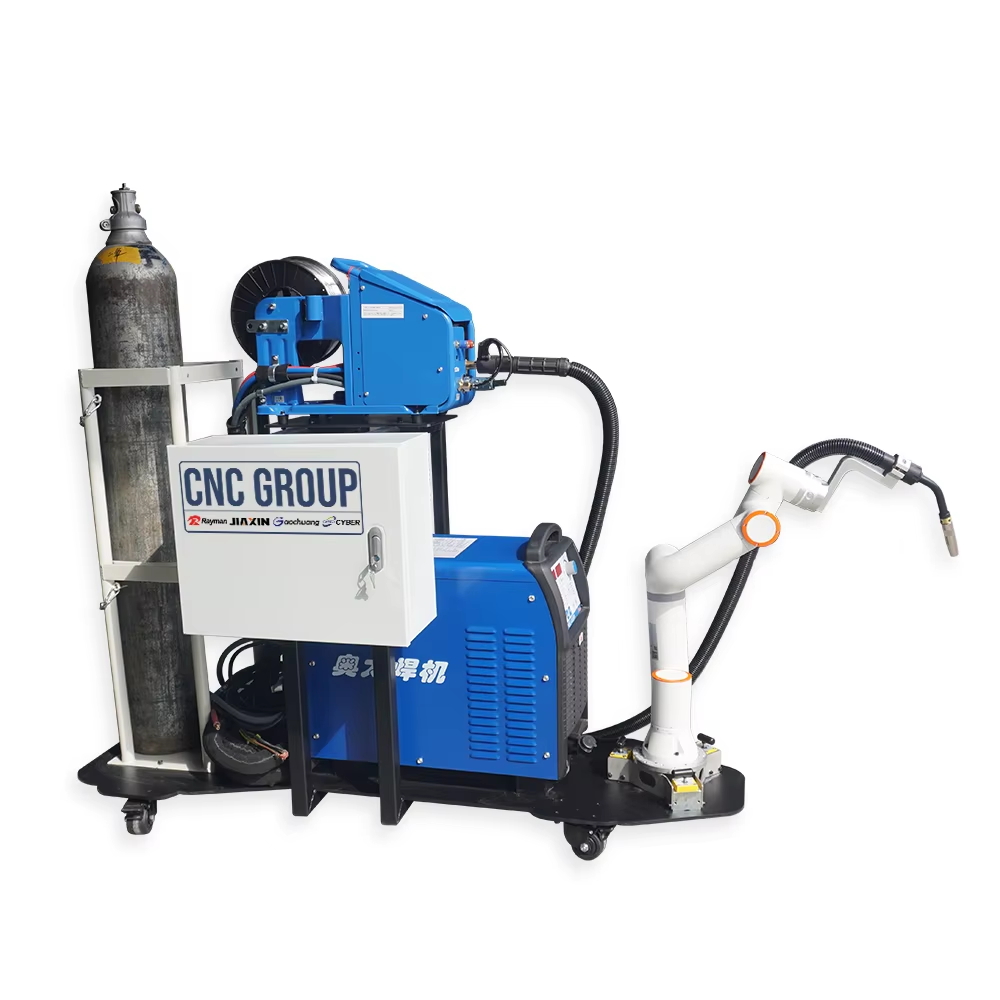
Increased Productivity with 24/7 Operation
Welding robots transform manufacturing productivity by enabling non-stop operations that human workforces physically cannot sustain. Unlike manual welding limited by shift schedules and fatigue, robotic systems maintain precision across continuous 72-hour production cycles – a capability that reduced cycle times by 22% in recent industrial automation trials.
How Welding Robots Enable Non-Stop Production and Reduce Cycle Times
Pre-programmed welding paths and auto-replenished wire feeders allow robots to work 24/7 without breaks, achieving 98.4% uptime in heavy manufacturing environments (2024 Robotics Census). Automated torch angle adjustments eliminate the need for positional stops, cutting per-unit weld time by 34 seconds on average compared to manual methods.
Case Study: Automotive Manufacturer Boosts Output by 60% Using Robotic Cells
A leading automotive manufacturer overhauled its chassis assembly line with 12 robotic welding cells, eliminating three daily shift changes. The cells maintained ±0.03mm repeatability across 680 continuous operating hours, increasing monthly output from 8,400 to 13,440 units – a 60% productivity gain validated over 18 months.
Trend: Growing Adoption of Shift-Free, Round-the-Clock Automation
55% of metal fabricators now operate welding robots overnight without human supervision, up from 29% in 2021 (Fabricators & Manufacturers Association). This trend aligns with global shifts toward lights-out manufacturing, where robotic systems handle 82% of arc welding tasks during off-hours.
Strategy for Integrating Continuous Operation Workflows
Successful 24/7 implementation requires:
- Synchronized material handling robots feeding welding stations
- Real-time weld monitoring via AI vision systems
- Modular fixturing that adapts to multiple product variants
Balancing Maintenance Schedules with High-Uptime Performance
Predictive maintenance algorithms analyze welding robot motor vibrations and wire feed rates, scheduling service during natural production gaps. This approach maintains 95.1% operational availability while preventing unplanned downtime – a critical factor for plants running 120+ consecutive hours.
Superior Weld Quality and Consistency
Precision Programming Ensures Repeatable, High-Quality Welds
Welding robots achieve micron-level accuracy through advanced motion control systems programmed with CAD/CAM-integrated welding parameters. This eliminates human inconsistencies in arc length, travel speed, and joint tracking – critical factors in aerospace and medical device manufacturing.
Reduced Rework and Material Waste Through Automated Accuracy
Automated weld seam tracking and real-time parameter adjustment reduce scrap rates by 72% compared to manual welding (Fabrication Trends Report 2024). Robotic systems detect and compensate for material variations in under 5 milliseconds, preventing costly rework cycles.
Case Study: Aerospace Supplier Achieves 99.8% Defect-Free Weld Rate
A Tier-1 aircraft component manufacturer automated turbine casing welds using vision-guided robots, meeting AS9100D aerospace quality standards. Post-implementation audits revealed:
| Metric | Manual Welding | Robotic Welding |
|---|---|---|
| Defects per 1k welds | 41 | 2 |
| X-ray inspection pass | 89% | 99.8% |
| Annual scrap cost | $740k | $18k |
Meeting Zero-Defect Standards in Safety-Critical Industries
Robotic MIG/TIG systems maintain <0.2mm positional repeatability required for nuclear containment vessels and pacemaker housings. Integrated spectrometers verify filler metal composition during deposition – a capability manual welding cannot replicate.
Standardizing Quality Across Global Manufacturing Sites
Cloud-connected welding robots in automotive plants from Detroit to Shanghai produce seams with 98% geometric consistency, enabled by centralized parameter libraries and remote weld monitoring platforms.
Cost Savings and Fast Return on Investment
Long-Term Reduction in Labor, Rework, and Operational Costs
Welding robots these days cut down on manufacturing costs because they automate things so precisely that human mistakes just don't happen as often. According to some research from last year, companies using robotic systems saw their labor bills drop about half what they would be if workers did all the welding manually. Plus, fixing defects after the fact costs around $47 less per item made when robots handle the job. Factory floor staff have noticed something else too – there's roughly 30 percent less wasted materials now that the machines control exactly how much wire and electrode gets used during each weld. The programming makes sure nothing goes to waste.
Data Insight: Average ROI Within 12–18 Months for Welding Robot Systems
Manufacturers recoup welding robot investments faster than most production technologies, with ROI within 18 months becoming standard across automotive and aerospace sectors. Key savings drivers:
- 80% reduction in overtime costs via continuous operation
- 15-ton annual material waste decrease per robot cell
- $120k average quality control savings from automated inspection
Overcoming the Upfront Cost Barrier: Financing and Leasing Options for SMEs
Third-party robot leasing programs allow small manufacturers to implement automation for $8–$15 hourly rates – comparable to skilled welder wages. Flexible SaaS payment models now cover 43% of North American robotic integrators’ installations, eliminating six-figure capital expenditures.
Calculating Total Cost of Ownership and Payback Period
A strategic TCO framework should evaluate:
| Factor | Manual Welding | Robotic Welding |
|---|---|---|
| Labor Cost/Year | $162k | $84k |
| Energy Consumption | 18kW/hr | 9kW/hr |
| Rework Rate | 12% | 0.9% |
Most facilities achieve payback within 14 months when calculating cumulative efficiency gains and waste reduction.
Lifecycle Savings vs. Initial Investment: A Strategic Perspective
While welding robots require $145k–$220k upfront investment, 7-year operational cost analyses show $2.1M savings potential through:
- 60% lower PPE replacement costs
- $310k OSHA penalty risk mitigation
- 90% extended tooling lifespan via optimal usage profiles
This financial model enables manufacturers to reallocate 18% of production budgets toward R&D initiatives within two deployment cycles.
Enhanced Workplace Safety and Risk Reduction
Welding Robots Minimize Exposure to Fumes, Heat, and Sparks
Welding robots eliminate direct human interaction with hazardous processes, confining exposure to toxic fumes, extreme temperatures, and sparks within enclosed workcells. Automated systems handle repetitive tasks in high-risk zones, reducing operator proximity to welding arcs by 80–95% compared to manual methods.
OSHA Data: 70% Drop in Welding-Related Injuries After Automation
A 2025 OSHA analysis of 14,000 manufacturing facilities found automation reduced welding-related injuries by 70%, with burns and respiratory incidents declining most significantly. Robotic systems enforce consistent adherence to safety protocols through programmed workflows that prevent human errors like improper PPE usage.
Case Study: Heavy Equipment Maker Improves Safety Compliance Metrics
A global heavy equipment manufacturer reduced safety violations by 92% after deploying welding robots across 18 production lines. The automation upgrade resolved 315 annual near-miss reports linked to manual welding stations while achieving perfect compliance with ISO 10218-2 robotic safety standards.
Designing Safe Human-Robot Workspaces With Modern Safety Protocols
Advanced welding robot installations now integrate:
- Light curtains and pressure-sensitive floor mats for collision avoidance
- Real-time air quality monitoring with automated fume extraction triggers
- AI-powered risk prediction systems that adjust robot paths during human interventions
These protocols enable collaborative workspaces where robots handle dangerous tasks while workers focus on quality oversight and system optimization.
Addressing Labor Shortages with Robotic Automation
Bridging the Skilled Welder Gap With Welding Robot Deployment
According to the National Association of Manufacturers from 2025, there's going to be a real problem with finding enough skilled workers in manufacturing by 2030, around 2.1 million people missing from the workforce. That's why so many factories are rushing to bring in welding robots right now just to keep their production lines running smoothly. The robots handle all those boring repetitive weld jobs that take forever, which means our certified welders don't have to waste time on them anymore. Instead they can work on the tricky joints where actual human judgment matters. Some manufacturers actually saw their production speed jump between 30 to 45 percent faster when they combined robot stations with workers who had learned new skills (Boston Consulting Group 2025). This shows that smart automation doesn't replace workers entirely but helps protect valuable industry know-how while still getting more done overall.
Industry Challenge: Rising Demand Amid Shrinking Welding Workforce
About a quarter of welders are getting close to retirement age right now, and fewer people are signing up for vocational programs these days. Because of this, manufacturing companies have seen their unfilled welding jobs jump by around 72% compared to what they were back in 2020. To help fill the gap, many plants are turning to robotics for those repetitive, high volume tasks. This lets human workers focus on the custom work that machines can't handle yet plus keep an eye on quality control. According to recent industry reports, businesses that implement these collaborative welding setups typically maintain about 94% of their normal workflow even when there are staffing changes going on.
Trend: Reskilling Workers to Operate and Supervise Robotic Systems
Forward-thinking manufacturers now invest in 12-week upskilling programs that transition welders into robotic cell supervision roles. Trainees learn programming fundamentals, predictive maintenance, and real-time quality monitoring – skills that increase earnings potential by 18–22% compared to traditional welding roles.
Optimizing Human-Robot Collaboration for Long-Term Workforce Stability
Advanced welding robots with AI-driven path correction enable less-experienced operators to achieve first-pass weld success rates exceeding 98%. This symbiosis extends workforce capabilities, with human technicians managing exception handling while robots maintain baseline productivity. Manufacturers adopting this model report 40% lower turnover in automated departments compared to manual welding teams.
FAQ
How do welding robots increase manufacturing productivity?
Welding robots boost productivity through non-stop operations that human workers cannot sustain. They eliminate constraints like shift schedules and fatigue, maintaining precision continuously and reducing cycle times.
What are the safety advantages of using welding robots?
Welding robots reduce human exposure to hazardous processes such as toxic fumes, heat, and sparks. They also minimize the risk of welding-related injuries through consistent adherence to safety protocols.
How do robots ensure superior weld quality?
Advanced robotic systems achieve micron-level accuracy, ensuring repeatable, high-quality welds. They reduce rework and material waste through automated weld seam tracking and real-time parameter adjustments.
What is the ROI period for investing in welding robots?
The return on investment for welding robots is typically within 12 to 18 months, due to significant savings in labor, rework, and material costs.
How do welding robots address labor shortages?
By automating repetitive welding tasks, robots allow skilled welders to focus on complex jobs that require human judgment, mitigating labor shortages and improving production efficiency.
Table of Contents
-
Increased Productivity with 24/7 Operation
- How Welding Robots Enable Non-Stop Production and Reduce Cycle Times
- Case Study: Automotive Manufacturer Boosts Output by 60% Using Robotic Cells
- Trend: Growing Adoption of Shift-Free, Round-the-Clock Automation
- Strategy for Integrating Continuous Operation Workflows
- Balancing Maintenance Schedules with High-Uptime Performance
-
Superior Weld Quality and Consistency
- Precision Programming Ensures Repeatable, High-Quality Welds
- Reduced Rework and Material Waste Through Automated Accuracy
- Case Study: Aerospace Supplier Achieves 99.8% Defect-Free Weld Rate
- Meeting Zero-Defect Standards in Safety-Critical Industries
- Standardizing Quality Across Global Manufacturing Sites
-
Cost Savings and Fast Return on Investment
- Long-Term Reduction in Labor, Rework, and Operational Costs
- Data Insight: Average ROI Within 12–18 Months for Welding Robot Systems
- Overcoming the Upfront Cost Barrier: Financing and Leasing Options for SMEs
- Calculating Total Cost of Ownership and Payback Period
- Lifecycle Savings vs. Initial Investment: A Strategic Perspective
- Enhanced Workplace Safety and Risk Reduction
- Addressing Labor Shortages with Robotic Automation
- FAQ