
 EN
EN
Why Collaborative Robots Are Transforming Small-Batch Manufacturing
The Shift Toward Human-Robot Collaboration in Modern Production
We're seeing something pretty big happening with these collaborative robots, often called cobots. They represent a major change in how machines work with people instead of just replacing them entirely. Traditional factory robots need those safety cages around them, but cobots are different. These newer models actually have features like LiDAR sensors, advanced 3D vision systems, and force detection technology that lets them work right next to humans without causing harm. For many manufacturing operations, this means they can handle boring, repetitive jobs such as moving parts between stations or loading/unloading machines. At the same time, human workers get to focus on checking product quality and making important decisions where judgment matters. A recent report from Future Market Insights found that almost half (around 42%) of small and medium businesses are choosing cobots instead of older automation methods because they take up less room, set up quickly, and let companies make better use of their existing workshop areas.
How Collaborative Robots Enhance Flexibility and Responsiveness
Collaborative robots really shine where operations need to change quickly. The way they're built modularity-wise plus those easy-to-use programming systems means we can move them from packing areas to assembly lines or quality checks in less than two hours. That's about 90 percent quicker compared to fixing up old automated systems. Looking at actual factories using these cobots, most report getting responses to product design changes anywhere from 30 to 50 percent faster. Makes all the difference when making specialized parts or running short production runs of special edition items. And there are these mobile versions too that bring materials right where needed at just the right moment. No more tearing apart conveyor belts and spending weeks on expensive modifications.
Growing Adoption of Collaborative Robots Among SMEs
Small and medium enterprises are really taking off with collaborative robots right now. The numbers tell an interesting story too - deployment rates among SMEs have actually grown at triple the speed we see in big corporations since early 2022. According to recent industry data from 2024, around two-thirds of manufacturing businesses below the 500-employee mark are already working with cobots for production runs under 1,000 items. Why? Well, these companies love how they don't need expensive safety cages anymore, get their money back within just over a year, and keep workers happier because dangerous jobs get handled by the machines instead. Take what's happening in Spain's auto industry as proof. Workshops there that adopted cobot technology saw their output for smaller batches jump by almost double, all while reducing workplace injuries by nearly four-fifths. Pretty impressive stuff when you think about it.
Key Advantages of Collaborative Robots in Customized, Low-Volume Production
Meeting Rising Demand for High-Mix, Low-Volume Manufacturing
Collaborative robots really shine when there are more than 15 different products being made in each batch run something that affects about two-thirds of small volume producers according to McKinsey research from last year. These machines can switch between making parts for cars and medical equipment surprisingly fast sometimes switching production within just a few hours. Traditional manufacturing setups often take weeks to reprogram for new tasks, but cobots come with simple visual programming tools that cut down on setup time dramatically. Some factories report saving anywhere from 40 to 60 percent of their previous setup hours thanks to these intuitive interfaces as noted in Automation World earlier this year.
Reconfigurable Workflows That Minimize Downtime
Modern cobot cells integrate modular tool changers supporting 15+ end-effector configurations, eliminating dedicated lines for each task. A recent industry comparison found cobot-driven facilities achieve 92% equipment utilization, compared to 61% in fixed-automation plants. This efficiency is vital when managing diverse orders such as:
- 50-unit batches of aerospace brackets
- 200 custom IoT sensor housings
- 75 prototype medical implants
Rapid Changeovers Enabled by Flexible Cobot Cells
Top automotive suppliers using cobots report 24-minute changeovers between product families—83% faster than conventional automation (AMFG 2024). This speed stems from lightweight construction (15–35 kg payloads) and vision-guided positioning that auto-adjusts to new fixturing layouts.
Case Study: Electronics Assembly Line with Agile Cobot Integration
A Midwest manufacturer reduced lead times for military-grade connectors from 14 days to 36 hours through cobot deployment. The system combines:
- Force-limited UR10e arms for delicate component handling
- Modular EOAT racks with 12 specialized grippers
- Real-time MES integration for order prioritization
This setup achieved 99.4% first-pass yield while accommodating weekly batch sizes ranging from 25 to 300 units.
Integrating Collaborative Robots Into Existing Manufacturing Systems
Manufacturers looking to get good returns on their investments without messing up day-to-day operations need to match what collaborative robots can do with what's already happening on the factory floor. According to a study published last year, companies that actually look at their tasks carefully before installing these robots end up getting integrated 37 percent quicker compared to places that just throw them in and see what happens. Start by finding all those boring, repeatable jobs like tightening screws or organizing components where these cobots can take over and cut down on worker tiredness while still hitting that super tight tolerance range of plus or minus 0.1 millimeters that's standard for putting together electronic gadgets, as reported by Automation World in 2023. When trying things out, it makes sense to set up separate cobot workstations first so they can test how well they handle feeding machines during regular shifts before rolling them out across several different production areas at once.
Assessing Tasks Suitable for Human-Cobot Collaboration
Focus on high-frequency, low-variability tasks where cobots complement human judgment. Common targets include CNC machine loading (used by 72% of early adopters) and vision-guided inspections requiring sub-0.5mm accuracy.
Defining Clear Roles Between Operators and Collaborative Robots
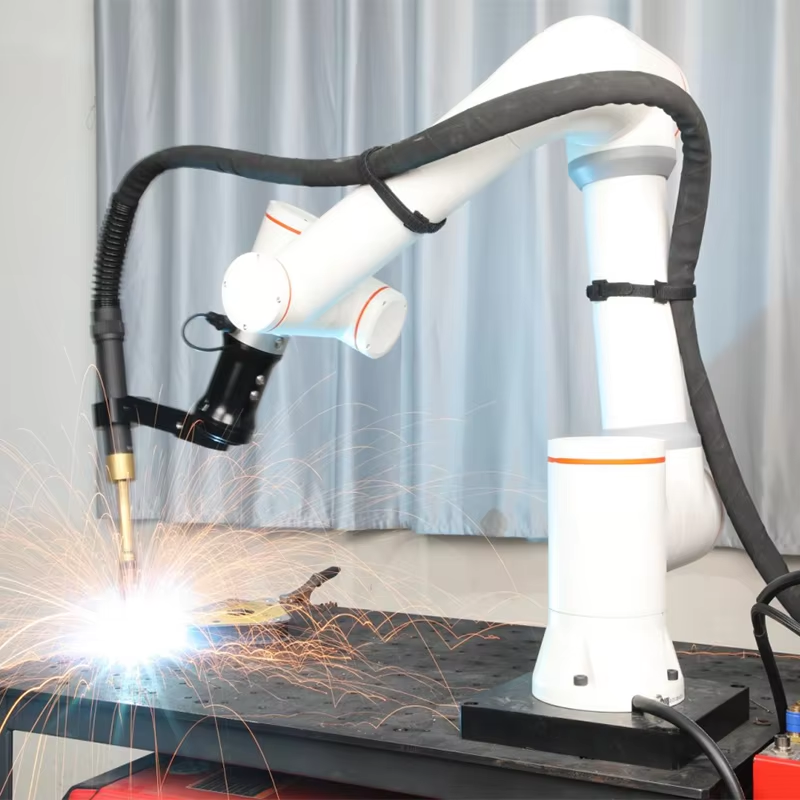
Adopt role-based allocation: operators manage complex tool changes, while cobots handle repetitive welds or adhesive applications. Facilities using this model report 22% fewer production errors (Robotics Business Review 2023).
Starting Small: Pilot Projects to Scale Cobot Deployment Safely
Begin with 90-day pilots in packaging or palletizing, where cobots typically deliver 5—7 month ROIs. This phased approach supports workforce adaptation and generates cycle-time data for future optimizations.
Choosing the Right Collaborative Robot for Small-Batch Efficiency
Evaluating Payload, Reach, and Precision for Specific Applications
Collaborative robots deliver maximum value when specifications match application demands. Use this framework to guide selection:
| Application | Recommended Payload | Optimal Reach | Precision Tolerance |
|---|---|---|---|
| Electronics Assembly | 3–5 kg | 700–900 mm | ±0.05 mm |
| Machine Tending | 10–15 kg | 1,300–1,500 mm | ±0.2 mm |
| Precision Welding | 5–8 kg | 1,000–1,200 mm | ±0.1 mm |
A 2024 robotics efficiency study found that 68% of manufacturers overbuy payload capacity, increasing upfront costs by $14k–$22k per unit. For example, a 10 kg cobot handling 3 kg components wastes 40% of its potential energy per cycle. Always account for end-effector weight (+15–20% margin) and future accessory needs. The Collaborative Robot Selection Guidelines emphasize measuring maximum part dimensions before finalizing reach requirements.
Matching Cobot Features to Custom Production Requirements
Modern cobots offer modular grips, vision systems, and force feedback to adapt to specialized workflows. In pharmaceutical batch runs, models with IP54 sealing and <0.01 N force sensitivity minimize contamination during vial handling. For custom furniture, cobots with 360° safety monitoring and 6-axis flexibility achieve 92% faster sanding and polishing setups than traditional automation.
Comparison of Top Cobot Models for SMEs and Niche Manufacturing
Three factors drive ROI in small-batch settings:
- ROI Period: Light-duty assembly cobots break even in 8–14 months vs. 22+ months for heavy industrial robots
- Safety Certifications: Look for ISO 10218-1 compliance and protective stop force below 150N
- Ecosystem Maturity: Systems with pre-validated third-party tooling cut integration costs by 33%
Leading vendors now offer 12-hour redeployment guarantees for high-mix lines. Prioritize those providing local technical support, as proven integration partnerships reduce unplanned downtime by 79% in first-year operations.
Enhancing Collaborative Robots with AI and Vision Systems
The Role of AI in Smarter Human-Cobot Interaction
Modern cobots use AI to interpret human gestures, voice commands, and workflow patterns in real time. Machine learning enables predictive adjustments—such as slowing arm speed near an operator or prioritizing urgent batches based on ERP inputs—reducing cognitive load and maintaining continuity.
Machine Vision for Real-Time Quality Control and Adaptability
Vision systems powered by artificial intelligence can spot defects with almost perfect accuracy around 99.9% in controlled environments, catching tiny flaws as small as less than 0.1mm even when things are moving fast. What makes these systems really valuable is their ability to make real-time adjustments. For instance, if there's some misalignment detected, a robotic arm might change where it welds something. Or when handling delicate parts, the system could automatically tweak how tightly it grips them. We saw this work wonders in the automotive industry recently. Some manufacturers reported cutting down on waste by about 32% after implementing these smart vision systems. They were able to check roughly 1,200 individual parts every single hour according to a report from Medical Design Briefs back in 2023.
Case Study: AI-Powered Cobot in Pharmaceutical Packaging
One major player in the medical field recently started using collaborative robots equipped with advanced AI chips to handle no fewer than 37 different drug formulations all along the same packaging line. The system employs special light scanning technology to check how full each capsule is and can actually slow down or speed up the conveyor belts depending on what's needed right then. These changes have slashed the time it takes to switch between products by almost two-thirds, while getting nearly perfect results during quality checks at 99.98% accuracy. According to Packaging World Insights from last year, this shows just how capable these smart machines are when it comes to keeping up with the exacting requirements of pharmaceutical manufacturing.
FAQ
What are collaborative robots, and how are they different from traditional factory robots?
Collaborative robots, or cobots, are designed to work alongside humans without the need for safety cages, unlike traditional factory robots. They have advanced sensors and technology that allow them to safely operate in close proximity to people.
Why are SMEs increasingly adopting collaborative robots?
SMEs prefer collaborative robots because they require less space, can be quickly set up, and provide a better return on investment by handling repetitive tasks while ensuring worker safety.
How do collaborative robots enhance flexibility and responsiveness in production?
Cobots offer modular and easy-to-program systems that enable rapid movement and adaptation in various production areas, thus responding to design changes faster than old automated systems.
Table of Contents
- Why Collaborative Robots Are Transforming Small-Batch Manufacturing
- Key Advantages of Collaborative Robots in Customized, Low-Volume Production
-
Integrating Collaborative Robots Into Existing Manufacturing Systems
- Assessing Tasks Suitable for Human-Cobot Collaboration
- Defining Clear Roles Between Operators and Collaborative Robots
- Starting Small: Pilot Projects to Scale Cobot Deployment Safely
- Choosing the Right Collaborative Robot for Small-Batch Efficiency
- Evaluating Payload, Reach, and Precision for Specific Applications
- Matching Cobot Features to Custom Production Requirements
- Comparison of Top Cobot Models for SMEs and Niche Manufacturing
- Enhancing Collaborative Robots with AI and Vision Systems
- The Role of AI in Smarter Human-Cobot Interaction
- Machine Vision for Real-Time Quality Control and Adaptability
- Case Study: AI-Powered Cobot in Pharmaceutical Packaging