
 EN
Precision Engineering: How CNC Bending Machines Achieve Sub-Millimeter Repeatability
Physics of bending: springback, K-factor, and bend allowance in CNC-controlled bending machines
Precision in a CNC bending machine begins with mastering the material’s inherent physics. When metal is formed, it naturally attempts to return to its original shape due to elastic recovery—a phenomenon called springback. To compensate, the machine must overbend beyond the target angle. The exact compensation depends on the material’s grain direction, yield strength, and thickness—all encoded in the controller. The K‑factor defines the neutral axis shift inside the bend, while bend allowance calculates the exact length of material consumed in the curved region. Modern CNC systems integrate these values with real-time angle monitoring; closed-loop measurement actively adjusts ram depth during the stroke, converting predicted springback into immediate correction. The result is angular accuracy routinely held within ±0.5° and linear tolerances as tight as ±0.1 mm—a level of consistency unachievable by manual methods. By programming material-specific parameters, a single CNC bending machine can switch from mild steel to aluminum without guesswork, keeping the entire batch inside the allowed dimensional window.
Critical precision components—Y1/Y2 axes, servo-driven back gauges, and hydraulic crowning systems
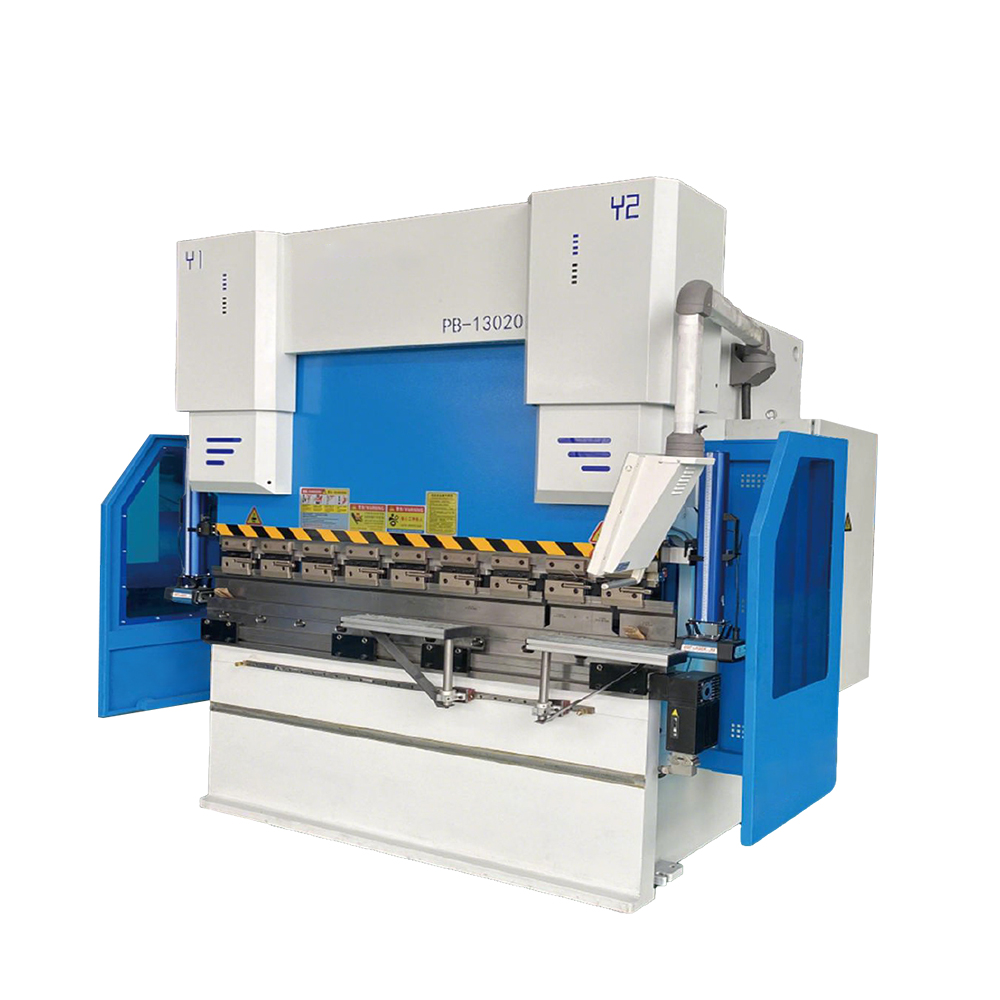
The sub-millimeter repeatability of a CNC bending machine is physically enforced by three core subsystems. Dual-cylinder Y1/Y2 axes employ precision-matched hydraulic cylinders and linear encoders that synchronize ram tilt in real time; any deviation beyond 0.01 mm triggers instant feedback correction, eliminating angular asymmetry across the workpiece length. Servo-driven back gauges position the sheet with positional accuracy of ±0.01 mm, automatically compensating for thermal expansion and mechanical wear through programmed offsets. Finally, hydraulic crowning systems counteract natural deflection of the press brake bed under load. By independently adjusting a series of wedges or cylinders, the system produces a counter-curve that guarantees uniform V-opening from end to end. Together, these components let a well-maintained CNC bending machine hold repeatability of ±0.01 mm (±0.0004 inch) across thousands of strokes, transforming the press brake into a metrology-grade instrument.
Calibration vs. real-time compensation: mitigating latent setup drift in high-accuracy production
Even a perfectly calibrated CNC bending machine can suffer from latent setup drift—a gradual shift in bend angle caused by hydraulic oil temperature changes, tooling wear, or material lot variations. Traditional static calibration sets the machine at the start of a shift but cannot respond to mid-run drift. In contrast, real-time compensation relies on in-process angle sensors that measure the actual bend as it forms. The controller compares the measured angle with the target and adjusts ram depth or back-gauge position within milliseconds. This closed-loop approach prevents accumulation of angular errors that plague multi-bend assemblies: a single 0.5° deviation across four bends would otherwise compound to a 2° misalignment, often scrapping complex parts. By applying per-stroke compensation, a CNC bending machine maintains sub-millimeter accuracy from the first part to the last, ensuring high-volume production never drifts out of specification.
Seamless Workflow Integration: From CAD Design to Finished Part
End-to-end CNC press brake workflow: offline programming, setup validation, sequential bending, and automated verification
A modern CNC bending machine streamlines production from design to final inspection through a tightly synchronized digital sequence. The process begins with offline programming, where bend sequences, tooling selections, and back-gauge positions are defined in CAM software—removing guesswork and reducing machine downtime. Once the program is transferred, setup validation uses simulation to detect collisions, test bend order, and verify tool clearances before metal ever touches the die. During sequential bending, the press brake automatically positions the sheet using multi-axis back gauges and executes each stroke with sub-millimeter precision. Integrated angle measurement immediately feeds back to the control, which adjusts the ram position on the fly to hold targets within ±0.2°. Finally, automated verification captures final bend angles and critical dimensions, logging them to the production record and alerting operators to any out-of-spec part without slowing the cell. This end-to-end digital thread eliminates manual re-setups, cuts scrap, and enables lights-out operation.
Smart integration: how modern CNC bending machines unify CAD/CAM software, IoT sensors, and adaptive feedback loops
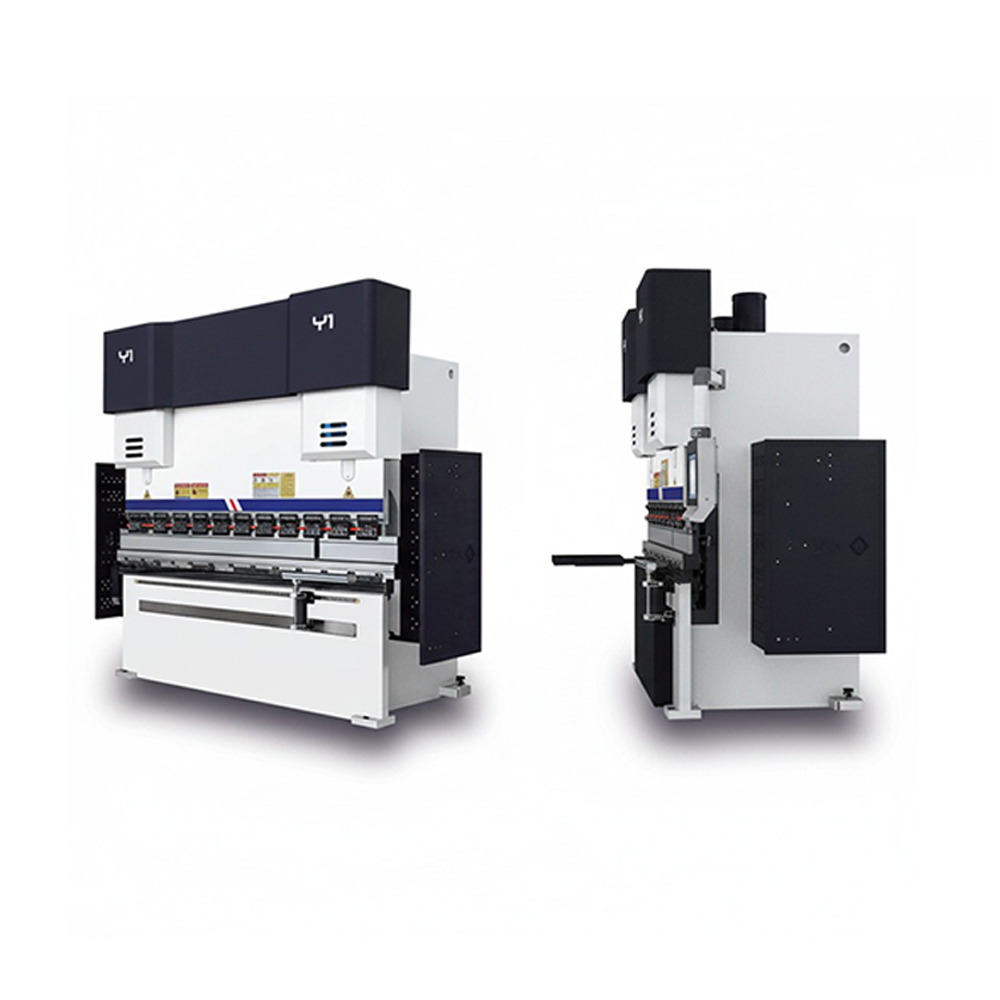
Today’s CNC bending machines serve as the physical node of a broader digital manufacturing ecosystem. Direct CAD-to-machine connectivity means that a validated 3D model automatically generates bend-specific flat pattern developments, K-factor calculations, and tool path instructions—no manual G-code editing required. IoT sensors embedded in the hydraulic system and back-gauge drives monitor temperature, pressure, and positioning in real time; this data feeds cloud-based analytics that detect wear patterns long before they cause deviation. Adaptive feedback loops close the circle: when a sensor measures springback variation due to batch-to-batch material differences, the controller instantly recalculates ram depth for the next bend, keeping every part on specification. The result is a self-optimizing system where the machine, software, and connected shop floor continuously refine performance, turning bending from an art into a repeatable, data-driven science.
Operational Advantages: Efficiency, Flexibility, and Sustainable Fabrication
Quantifying gains: cycle time reduction, scrap minimization, and labor efficiency with CNC bending machines
A modern CNC bending machine dramatically compresses the entire bending cycle. Servo-driven axes and optimized motion profiles reduce idle travel and eliminate unnecessary steps, shortening per-part time by up to 40% compared with older hydraulic presses. At the same time, closed-loop angle measurement and automatic springback compensation keep every bend within tolerance from the very first piece, driving scrap rates below 1% in many shops. Labor efficiency also improves: one operator can oversee a cell that runs lights-out for long stretches, while intuitive offline programming lets a single engineer prepare jobs for multiple CNC bending machines simultaneously. These gains compound quickly, turning a capital-intensive process into a predictable, low-waste production pillar.
Enabling low-volume, high-mix production through rapid job changeover and programmable tooling
CNC bending machines thrive in environments that demand frequent switch-overs. Stored bend programs and servo-driven back-gauge positioning eliminate tedious manual setup, cutting changeover time from an hour to as little as five minutes. Programmable tooling further accelerates the transition between part families: segmented punches and dies are automatically selected and clamped, so a single machine can process small batches of wildly different geometries without human intervention. For contract manufacturers, this agility unlocks profitability in high-mix, low-volume orders that once tied up skilled labor for hours.
Strategic Selection: Key Criteria for Choosing a CNC Bending Machine
Selecting the appropriate CNC bending machine is a strategic decision that directly impacts production throughput, part accuracy, and long-term operational costs. A methodical assessment of key capabilities ensures the chosen equipment aligns with both current workloads and future scalability.
| Selection Criterion | Description | Key Consideration |
|---|---|---|
| Material & Thickness Compatibility | The machine must handle the specific materials (mild steel, stainless, aluminum) and thickness ranges used in production. | Tonnage capacity, bend radius limitations, and material tensile strength dictate process limits; over-specifying wastes energy, under-specifying causes quality failures. |
| Bending Length & Force | Working length determines the maximum part size; tonnage correlates with thickness, length, and die opening. | Match machine length to the largest planned part, factoring in flange height and required die clearance. Typical press brakes range from 1 m to over 6 m. |
| Precision & CNC Control | Resolution of the back gauge, Y1/Y2 axis synchronization, and real-time compensation govern repeatable accuracy. | Look for ≤0.01 mm repeatability, servo-driven back gauges, and adaptive crowning to maintain consistent bend angles across the full length. |
| Tooling Flexibility | Rapid-clamp systems, segmented punches/dies, and programmable tool setups allow quick changeovers. | Assess tool storage capacity and the ease of integrating custom or quick-change tooling; hydraulic clamping can reduce setup times by over 60%. |
| Automation & Integration Readiness | IoT sensors, offline programming, and robotic load/unload interfaces protect future investments. | Confirm CAD/CAM compatibility, adaptive feedback loops, and open communication protocols (e.g., OPC UA) for lights-out manufacturing. |
| Energy Efficiency & Maintenance | Electro-hydraulic or all-electric drives minimize power consumption and hydraulic fluid usage. | Evaluate total cost of ownership, spare parts availability, remote diagnostics, and maintenance intervals to avoid unplanned downtime. |
| Support & Training | Manufacturer-provided installation, operator training, and responsive service agreements reduce learning curves and downtime. | Verify on-site support, availability of application engineers, and distance to service depots to ensure rapid problem resolution. |
By rigorously analyzing these criteria, fabricators avoid costly mismatches and secure a CNC bending machine that delivers sustained productivity, lower scrap rates, and a robust return on investment. The optimal choice harmonizes technical specifications with practical support infrastructure, making the machine a reliable, long-lived production asset.
FAQ
What is springback and how is it handled in CNC bending?
Springback is the elastic recovery of metal after bending, which causes it to return slightly to its original shape. CNC bending machines handle this by overbending the material based on precise calculations and real-time angle monitoring.
What components ensure precision in a CNC bending machine?
Precision is ensured by elements such as Y1/Y2 axis synchronization, servo-driven back gauges, and hydraulic crowning systems. These components work together to achieve sub-millimeter repeatability.
How do CNC bending machines compensate for latent setup drift?
Latent setup drift is mitigated using real-time compensation. Sensors measure the actual bend during the process, and adjustments are made instantly to maintain accuracy.
What is the role of CAD/CAM integration in CNC bending?
CAD/CAM integration automates the process from design to execution, generating bend-specific instructions and optimizing workflows, thereby reducing errors and setup time.
How do CNC bending machines support low-volume, high-mix production?
These machines streamline rapid job changeovers through stored bend programs, programmable tooling, and servo-driven adjustments, making them ideal for high-mix, low-volume settings.
What criteria should I consider when selecting a CNC bending machine?
Key criteria include material compatibility, bending length, precision control, tooling flexibility, automation readiness, energy efficiency, and manufacturer support.
Table of Contents
- Precision Engineering: How CNC Bending Machines Achieve Sub-Millimeter Repeatability
- Seamless Workflow Integration: From CAD Design to Finished Part
- Operational Advantages: Efficiency, Flexibility, and Sustainable Fabrication
- Strategic Selection: Key Criteria for Choosing a CNC Bending Machine
-
FAQ
- What is springback and how is it handled in CNC bending?
- What components ensure precision in a CNC bending machine?
- How do CNC bending machines compensate for latent setup drift?
- What is the role of CAD/CAM integration in CNC bending?
- How do CNC bending machines support low-volume, high-mix production?
- What criteria should I consider when selecting a CNC bending machine?