
 EN
EN
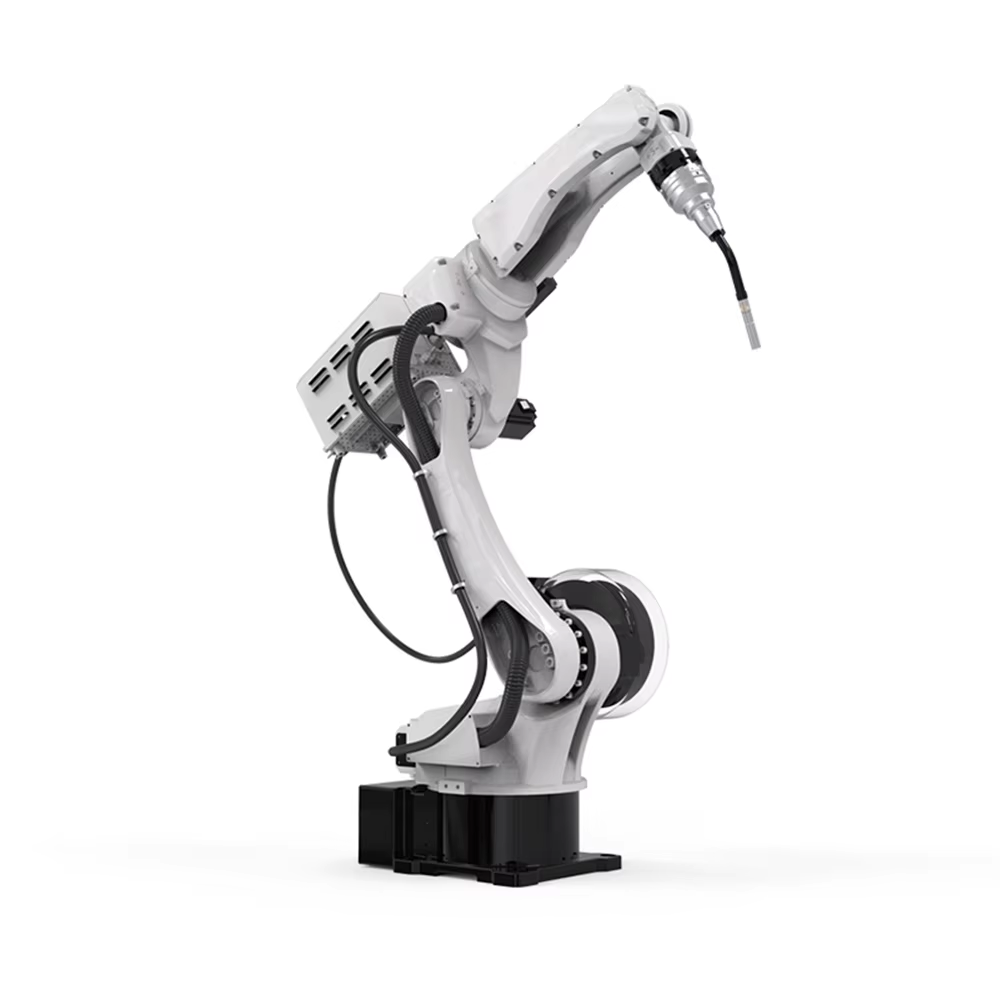
The Strategic Role of Welding Robots in Modern Manufacturing
Understanding Welding Automation and Its Strategic Importance
According to BC Industrial Services, welding robots can achieve positional accuracy down to around 0.1 mm, which is actually four times better than what humans manage manually. Manufacturers working on large-scale projects for aerospace and automotive industries benefit greatly from this kind of consistent performance, since it cuts down on rework needs by almost all - about 95% in some cases. The real advantage comes from how these machines handle weld penetration and bead quality without any variation between pieces, making sure everything stays within those tough industry specs that most factories struggle with when using traditional methods.
The Shift from Manual to Automated Welding Systems in Industrial Settings
The auto industry has seen a major shift lately with welding robots taking over about 80 percent of all arc welding jobs according to that recent Michale Automation study from 2025. Makes sense really because there's this huge gap in qualified welders around the world right now somewhere around 34% short if we go by their numbers. Plus these machines can work in places humans just can’t tolerate those super hot conditions or areas filled with harmful fumes. What this means for actual people working on shop floors is that many have moved into oversight positions instead. They watch how everything runs, tweak the robot settings when needed, and generally stay away from doing the same old repetitive tasks day after day.
How Robotic Welding Benefits for Manufacturing Efficiency Are Reshaping Production Floors
Robotic welding systems operate 24/7, increasing equipment utilization from 55% to 92% in metal fabrication facilities. Adaptive programming cuts changeover downtime by 73%, enabling rapid transitions between product variants. These systems also maintain steady energy consumption during continuous operation, reducing power waste by 18–22% per weld—a dual efficiency gain unattainable with human crews.
Maximizing Productivity with 24/7 Robotic Welding Operations
Measuring the Increase in Productivity Through Robotic Welding
Modern welding robots achieve 40% higher output than manual teams while maintaining consistent quality, based on findings from manufacturing efficiency research (Genesis Systems). Freed from fatigue and shift rotations, robotic systems sustain optimal speeds across thousands of cycles—making them ideal for high-demand sectors like automotive and heavy equipment manufacturing.
Welding Robots and Their Role in Manufacturing: Enabling 24/7 Continuous Operation
By removing breaks and shift-change delays, robotic welders add over 18 productive hours per day. In high-volume settings, this uninterrupted workflow has enabled manufacturers to double monthly throughput despite employing 15% fewer personnel, as noted in an analysis of automated production lines.
Case Study: Automotive Assembly Line Achieving 30% Faster Cycle Times With Welding Robots
A Midwest auto parts supplier integrated six robotic welding stations into its production floor, yielding significant improvements:
| Metric | Manual Process | Robotic Implementation | Improvement |
|---|---|---|---|
| Cycle time per unit | 4.2 minutes | 2.9 minutes | 31% faster |
| Daily output | 340 units | 520 units | 53% increase |
| Defect rate | 8.1% | 1.7% | 79% reduction |
These gains were driven by synchronized robotic arms operating in continuous loops, minimizing idle time between weld sequences.
Impact of Robotic Welding on Cycle Times and Overall Throughput
Standardized travel speeds and tool positioning eliminate the 12–18% time variance common in manual welding. This predictability supports just-in-time manufacturing by enabling precise scheduling. Facilities using robotic systems report 22–38% faster order fulfillment, with throughput advantages compounding under 24/7 operation.
Achieving Superior Weld Quality and Consistency Through Automation
Achieving Consistent Weld Quality and Reduced Rework with Welding Robots
Modern welding robots equipped with advanced sensors and real time feedback can keep their welds extremely accurate, often within fractions of a millimeter, even after doing thousands of identical joints. These machines manage things like arc length, how fast they move along the joint, and the amount of heat applied something that even experienced human welders struggle to keep perfectly consistent. According to industry reports from last year, companies using robotic welding systems saw their rework costs drop nearly 60% because the robots produce much more uniform penetration and better looking bead shapes on every single weld.
Reduction of Human Error in Welding Processes Through Robotic Precision
Around three quarters of all manual welding problems come down to human mistakes caused by things like tired workers, getting distracted, or just not keeping the same technique throughout. That's where robotic systems really shine, cutting those errors way down with almost perfect repetition rates in important jobs like making pressure vessels. The robots have smart software that can tweak itself on the fly when materials aren't exactly consistent, which stops failures before they happen. Take one big equipment maker for instance who stopped having about 12 thousand welding issues every year after switching to automated systems at their plant.
Data Insight: 95% Defect Reduction Reported After Implementing Automated Welding Systems
Organizations deploying robotic welding cells report dramatic quality improvements:
- 95% fewer porosity defects (Welding Quality Consortium 2023)
- 87% reduction in rework cycles
- 0.02mm positional accuracy compared to 0.5mm variance in manual work
These outcomes stem from monitoring systems making over 500 micro-adjustments per second—far exceeding human capability.
Controversy Analysis: Can Robots Match Artisan-Level Welds in Niche Applications?
Some folks still think robots can't handle those tricky custom or artistic weld jobs, but recent AI improvements are making real progress here. Modern welding bots come equipped with 3D seam tracking down to about 0.01mm accuracy, plus special algorithms that adjust filler material for all sorts of weird joint shapes. They even learn from what experts call "golden weld" examples during training sessions. A report from last year showed these machines hit human quality standards in almost nine out of ten aerospace T-joint tests. That kind of performance suggests we're seeing serious potential for robots in fields where craftsmanship matters most.
Cost Efficiency and ROI of Deploying Welding Robots
Manufacturers adopting welding robots realize substantial cost savings and accelerated return on investment (ROI) by optimizing labor use, minimizing material waste, and improving energy efficiency.
Reduction in production costs through automation and labor optimization
Robotic welding eliminates inefficiencies tied to manual labor, including overtime and error-related rework. One robotic cell typically replaces 2–3 skilled welders, allowing companies to redeploy talent to higher-value roles. Precision path planning reduces material waste by 12–18%, especially beneficial in complex, high-volume component production.
Lower operational costs and long-term savings with welding robot deployment
Robots operate at constant speeds without energy spikes, lowering consumable usage. Integrated sensors optimize gas flow and wire feed rates, cutting consumable costs by up to 23% compared to manual processes. Maintenance remains predictable, with most systems requiring only scheduled service every 2,000 hours.
ROI analysis: Break-even point within 18 months for mid-sized manufacturers
A typical $150,000 robotic welding system delivers ROI through:
- 45–60% reduction in direct labor costs
- 30–40% decrease in post-weld processing
- 25% faster job changeovers
Industry data shows mid-sized manufacturers typically recoup their investment within 18 months, with ongoing annual cost savings of 22–35% compared to manual welding methods.
FAQ Section
What are the key benefits of using welding robots in manufacturing?
Welding robots offer efficiency gains through increased productivity, consistent quality, reduced rework, lower production costs, and energy savings. They also help overcome labor shortages by taking over repetitive tasks.
How do robotic welding systems improve weld quality and consistency?
Equipped with advanced sensors and software, robotic welding systems can maintain precise control over welding parameters, resulting in better penetration and bead quality with fewer defects.
Can welding robots work around the clock?
Yes, welding robots can operate 24/7, enabling continuous production and maximizing throughput, free from fatigue or shift changes.
Do welding robots require extensive maintenance?
Welding robots require scheduled maintenance, typically every 2,000 operational hours, ensuring predictable upkeep without significant downtime.
What’s the ROI period for integrating welding robots in manufacturing?
Mid-sized manufacturers can typically achieve a break-even point within 18 months, experiencing ongoing annual cost savings thereafter.
Table of Contents
- The Strategic Role of Welding Robots in Modern Manufacturing
- Maximizing Productivity with 24/7 Robotic Welding Operations
-
Achieving Superior Weld Quality and Consistency Through Automation
- Achieving Consistent Weld Quality and Reduced Rework with Welding Robots
- Reduction of Human Error in Welding Processes Through Robotic Precision
- Data Insight: 95% Defect Reduction Reported After Implementing Automated Welding Systems
- Controversy Analysis: Can Robots Match Artisan-Level Welds in Niche Applications?
- Cost Efficiency and ROI of Deploying Welding Robots
- FAQ Section