
 EN
EN
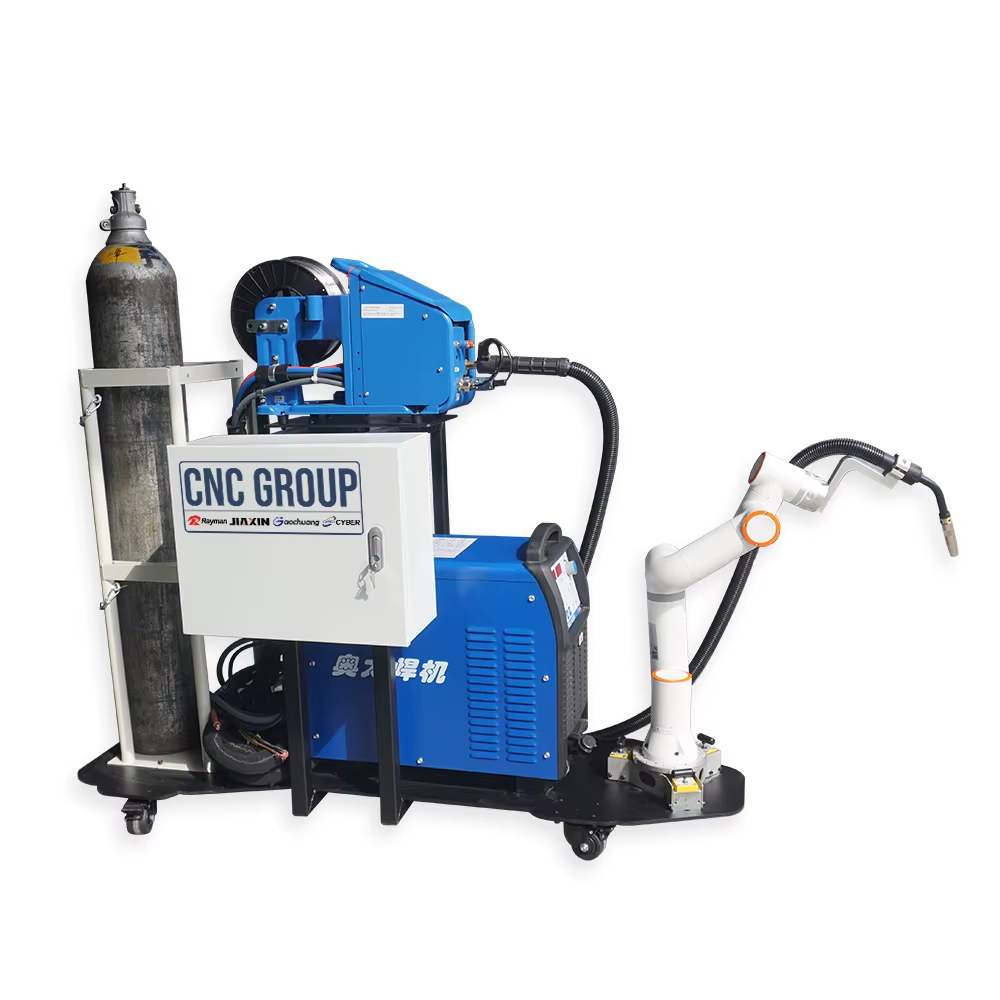
Why Drag Teaching Changes the Welding Robot Economics
A drag teaching robot eliminates the programming barrier that traditionally limited robotic welding to high-volume production lines. Instead of requiring a robotics engineer to write G-code or teach points through a teach pendant, the operator physically grasps the robot arm, moves it through the weld path, and the system records the trajectory. This reduces programming time from hours to minutes and makes single-batch and small-lot production economically viable for robotic automation.
The ROI calculation shifts fundamentally when programming costs drop. A conventional welding robot requiring four hours of engineering time per new part configuration at 75/hour incurs 300 in programming cost. A drag teaching robot completing the same teaching task in 15 minutes at operator wage rates incurs roughly 5 in programming cost. The 295 difference per changeover accumulates rapidly when a shop runs 15–30 different part configurations monthly.
A metal fabrication shop in Southeast Asia producing custom structural brackets adopted a collaborative drag teaching welding robot after struggling with skilled welder availability. The shop previously employed three certified welders. After installing the robot alongside two remaining welders, output increased 40% while rework from inconsistent manual bead quality dropped by approximately 70%. The 10kg payload, 1.8m arm reach configuration handled the bracket size range without requiring workpiece repositioning.
Drag Teaching Technology Fundamentals
How Direct Teaching Works
A drag teaching robot uses force-torque sensors integrated into each joint, detecting the magnitude and direction of force applied by the operator's hand. When the operator grips the arm and moves it, the control system enters a zero-force control mode — the motors actively compensate for gravity and friction while following the operator's applied force vector. The result feels like moving through water: resistance exists but directional intent translates smoothly into motion.
The teaching process records waypoints — positions and orientations through which the welding torch must pass — along with process parameters including travel speed, weave pattern, and arc characteristics. The robot interpolates between waypoints using the same motion planning algorithms that execute programmed paths, so the recorded trajectory reproduces with the robot's inherent repeatability of ±0.03–0.05mm rather than the operator's manual positioning accuracy of ±1–2mm.
Collaborative Safety Features
Drag teaching robots designed for collaborative operation incorporate safety-rated force and speed monitoring that eliminates the need for physical guarding in many applications. The robot arm stops within milliseconds when contact force exceeds programmed thresholds, allowing the operator to work alongside the robot without safety fences that consume floor space and impede material flow.
This collaborative capability changes the workspace economics. A fenced conventional robot cell requires approximately 3×3 meters of dedicated floor area that cannot be used for other operations. A collaborative drag teaching station occupies the robot's footprint plus operator workspace — typically 2×2 meters — and can be relocated when production layouts change.
Maximizing ROI Through Application Selection
Part Characteristics for High Return
Drag teaching delivers the highest ROI on parts meeting three criteria: frequent configuration changes that make conventional programming cost-prohibitive, weld quality requirements exceeding manual consistency, and part geometries within the robot's reach envelope. Parts that remain unchanged for production runs exceeding 500 units may achieve better ROI from conventionally programmed robots optimized for cycle time rather than programming efficiency.
Material thickness between 1–6mm represents the sweet spot for collaborative robot welding because the arc parameters remain stable at the travel speeds achievable by arm-mounted torches. Thicker materials requiring multi-pass welding benefit from the robot's consistent bead placement between passes — a task where manual welders accumulate positioning errors that increase with each subsequent pass.
Operator Skill Transition
The transition from manual welding to robot operation requires a different skill approach than conventional robot programming. The drag teaching interface gives experienced welders an intuitive bridge: they demonstrate the technique they want the robot to reproduce, then fine-tune parameters rather than learning a programming language from scratch.
Rayman CNC demonstrated this approach at the World Intelligent Manufacturing Conference in December 2024, showcasing an intelligent welding workstation integrating collaborative robots with drag teaching. The demonstration focused on how operators with welding expertise but no programming background could teach complex weld paths within minutes.
Production Scheduling Optimization
Drag teaching enables scheduling that would be uneconomical with conventional robots. A shop running 20 different part numbers weekly, each in quantities of 10–50 units, can teach each configuration in 10–20 minutes rather than spending 2–4 hours programming per part. Cumulative programming savings recover investment faster than throughput improvements.
Rush orders also benefit. When a customer needs 30 brackets by tomorrow morning, the 15-minute teaching time means the robot is welding within the hour — versus the day or more required to schedule, program, and verify a conventional robot.
Frequently Asked Questions
What is the typical programming time for a drag teaching robot?
A simple linear weld on a flat plate takes 2–5 minutes to teach. A complex multi-seam assembly with position changes takes 10–20 minutes. The same tasks on a conventional teach-pendant robot require 30 minutes to 4 hours depending on programmer experience.
Does drag teaching compromise weld accuracy?
No. The robot records the taught trajectory and reproduces it with the robot's mechanical repeatability (±0.03–0.05mm), which exceeds manual positioning accuracy. The teaching demonstration determines the path shape; the robot's precision determines execution.
What payload and reach are available for drag teaching welding robots?
Common collaborative welding configurations include 10kg payload with 1.8m arm reach, suitable for most small-to-medium fabrication tasks. Larger payloads accommodate heavier torches and cable management. Rayman CNC offers drag teaching robots across multiple payload classes to match application requirements.
How does ROI compare between drag teaching and conventional robot programming?
Drag teaching ROI advantages appear strongest in high-mix, low-volume production. Programming cost per part changeover drops from 150–400 (conventional) to 3–10 (drag teaching). Shops changing configurations 100+ times monthly recover the robot investment from programming savings alone within 12–18 months.
What safety certifications apply to collaborative drag teaching robots?
ISO 10218-1 and ISO/TS 15066 define collaborative robot safety requirements including force and speed limits for human-robot contact. Drag teaching robots meeting these standards can operate without physical guarding when risk assessments confirm safe interaction parameters.
Can existing welders transition to drag teaching robot operation?
Yes. The physical demonstration interface aligns with the welder's existing skill — they show the robot the technique rather than learning code. Rayman CNC provides operator training covering teaching techniques, parameter adjustment, and basic maintenance during equipment commissioning.