
 EN
EN
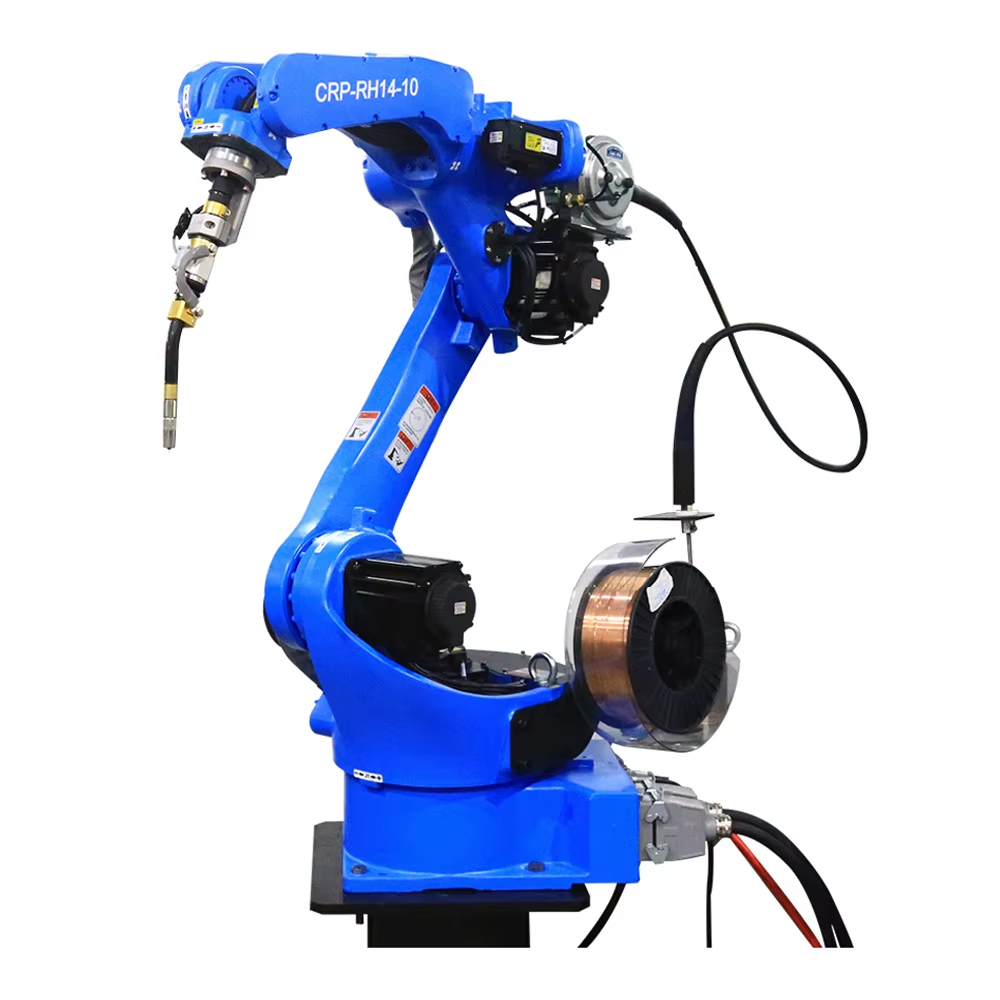
Automation as a Growth Strategy, Not a Cost Reduction Tool
Industrial automation is often framed as labor replacement — a narrative that obscures its more powerful function as a growth enabler. Manufacturers using automation primarily for headcount reduction typically capture 15–25% of the potential value. Those deploying automation to increase throughput consistency, enable product variety, and reduce time-to-market capture 3–5 times that value through revenue growth rather than cost savings alone.
The distinction matters because growth-oriented automation justifies investment even in regions with low labor costs, where cost-reduction ROI calculations fail. A manufacturer in a labor market paying $3–5/hour may find labor savings insufficient to justify capital expenditure. The same manufacturer considering that manual production variability causes 8–12% rework rates and delivery delays that lose 2–3 customer contracts annually makes the automation case on revenue protection and consistency rather than hourly wage arbitrage.
A sheet metal fabricator serving the automotive supply chain integrated CNC fiber laser cutting and robotic welding into a workflow previously dependent on manual plasma cutting and stick welding. The driver was part-to-part consistency — specifically, maintaining ±0.2mm dimensional tolerance that the automaker's incoming inspection enforced with 100% sampling. Three rejected shipments in the preceding year had cost the fabricator approximately $85,000 in penalties and return freight.
Technology Integration Principles
From Standalone Machines to Connected Workflows
Effective industrial automation connects individual machines into coherent production flows rather than installing isolated pieces of equipment. A fiber laser cutting machine producing parts 40% faster than the previous plasma cutter creates a downstream bottleneck if the bending and welding stations cannot absorb the increased output. The productivity gain at the cutting station becomes inventory accumulation between processes rather than faster order fulfillment.
The integration approach starts with value stream mapping: identifying the constraint operation that limits total throughput, automating that bottleneck first, then extending automation upstream and downstream as the constraint moves. Automating non-constraint operations first creates islands of efficiency that do not improve overall output.
CNC laser cutting with automatic loading and unloading exemplifies this principle. The cutting machine's throughput depends as much on material handling speed as on cutting speed. A machine that cuts a sheet in three minutes but requires five minutes for manual loading and unloading achieves 37.5% utilization. Adding automatic sheet loading and part sorting increases utilization to 70–85% by eliminating the handling bottleneck — often a higher-ROI investment than upgrading to a faster cutting source.
Data-Driven Process Control
Automation generates operational data that manual processes conceal. A CNC laser cutting machine records cutting time per part, assist gas consumption per sheet, and pierce time per material thickness. Collecting and analyzing this data reveals the patterns that manual operations obscure: which material suppliers' sheets cut consistently versus those requiring parameter adjustments, which operators achieve higher utilization through better nesting decisions, and which maintenance intervals actually prevent downtime rather than following calendar-based schedules.
The data feedback loop enables continuous improvement that manual operations cannot match. When a process deviation occurs — a cut quality issue, a dimension out of tolerance — automated systems log the parameters at the moment of deviation. Root cause analysis uses logged data rather than operator recall, reducing diagnosis time from hours to minutes and preventing recurrence through parameter adjustments validated against historical data.
Sustainability Through Automation
Material Efficiency
Laser cutting automation directly impacts material utilization — the percentage of sheet metal converted to saleable parts. Manual nesting typically achieves 60–70% utilization because the operator arranges parts on the sheet by eye within a limited time window. Automated nesting software using algorithmic optimization achieves 75–85% utilization by calculating thousands of arrangements in seconds, reducing the skeleton waste that becomes scrap metal.
For a fabricator processing 200 tons of steel monthly at 800/ton, improving material utilization from 65% to 80% saves 24,000 monthly in raw material cost — approximately $288,000 annually. The nesting software investment typically costs less than two months of these material savings.
Energy and Consumable Optimization
Automated cutting parameter control reduces assist gas consumption by matching gas pressure to specific material and thickness. Oxygen and nitrogen consumption drops 15–25% through optimization that manual operators cannot replicate.
Energy efficiency extends to production scheduling. Automated systems batch similar material thicknesses, reducing pierce time and gas consumption. A production run of 50 identical-thickness sheets consumes less gas per part than 50 sheets of varying thicknesses because the pierce cycle is optimized once for the batch.
Frequently Asked Questions
What is the typical ROI timeline for industrial automation in sheet metal fabrication?
ROI timelines range from 12–24 months for laser cutting automation and 18–36 months for robotic welding integration. The fastest payback occurs when automation addresses a specific constraint operation rather than replacing non-bottleneck processes. Rayman CNC provides application analysis identifying the highest-ROI automation starting point.
How does automation affect product quality consistency?
Laser cutting automation typically reduces dimensional variation from ±0.5mm (manual plasma/flame cutting) to ±0.05–0.1mm. Robotic welding reduces bead width variation from ±2mm (manual) to ±0.5mm. These improvements directly reduce rework rates and customer rejection frequency.
What skills do operators need for automated equipment?
CNC laser cutting requires basic computer literacy for nesting software operation and parameter adjustment — typically 1–2 weeks of training. Drag teaching robots require welding expertise without programming skills. Rayman CNC provides operator training as part of equipment commissioning.
Can existing manual equipment be integrated into an automated workflow?
Legacy equipment with digital interfaces and standard communication protocols can often be integrated through retrofit controllers and sensors. Equipment without digital interfaces requires replacement or parallel operation. Integration assessment should precede automation equipment selection.
What maintenance does automated cutting equipment require?
Laser cutting machines require protective lens cleaning or replacement every 200–500 cutting hours, linear guide lubrication weekly, and assist gas system filter changes monthly. Optical path alignment checks every 3–6 months prevent gradual cut quality degradation.
How does automation support sustainability goals?
Material utilization improvements of 10–20 percentage points reduce raw material consumption and scrap. Energy-efficient servo drives reduce power consumption 20–30% compared to hydraulic systems. Rayman CNC designs equipment with sustainability metrics including material yield and energy consumption per part produced.