
 EN
EN
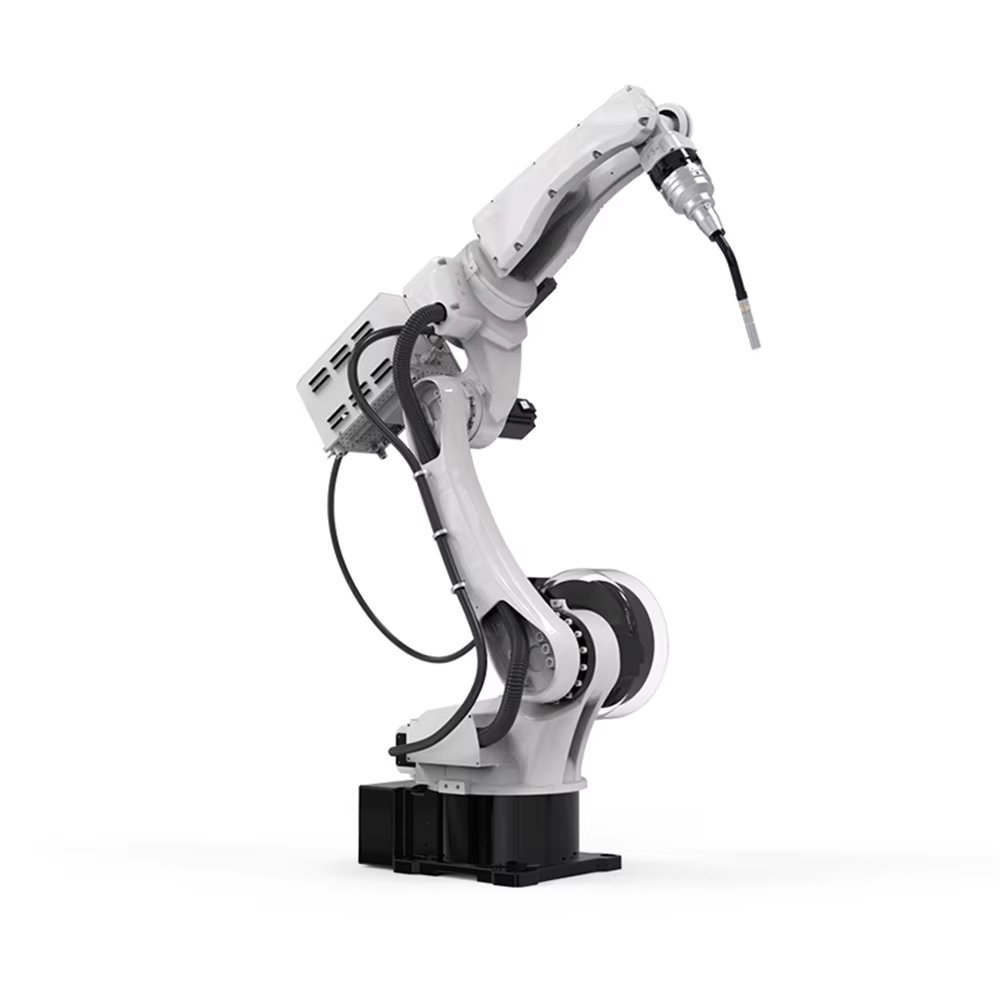
Human robot collaboration lets a person and a machine share a workspace without a fence, which changes how assembly cells are built and staffed.
How a Small Assembler Doubled Output per Person
When human robot collaboration Removed the Cage
A electronics assembler in Portugal ran a guarded robot cell that needed a technician to load parts, step back, and wait behind a fence. The stop-start rhythm capped output. The team replaced it with a force-limited cobot working beside the operator. Human robot collaboration let the person feed components while the cobot tightened and torqued, then both moved to the next unit together. Output per person roughly doubled without adding floor space.
The cage was never the point. Removing it returned the rhythm to the human, who sets the pace the machine follows.
How Work Gets Divided Differently
Collaboration reallocates tasks by strength, not by habit. People handle judgment, irregular parts, and quality calls; the cobot handles repeatable force and endurance. Human robot collaboration works best when the split is designed, not improvised on the line. Teams that map each step to the right actor see fewer errors and less fatigue. The operator stays engaged rather than watching a machine behind glass, which helps retention on monotonous shifts.
What Makes Collaboration Safe
Power, Force, and Speed Limits
Collaborative robots are built to limit contact forces, but the limit applies to the robot, not the whole cell. Human robot collaboration stays safe when the cobot's speed and separation are tuned to the task and the tool it carries. A sharp or hot end effector changes the risk even if the arm is gentle. Speed-and-separation monitoring slows or stops the arm as a person approaches, trading a little cycle time for a much lower injury chance.
Risk Assessment and the Standards Behind It
Safety is engineered, not assumed. Human robot collaboration must pass a documented risk assessment under ISO/TS 15066, which sits alongside the ANSI/RIA R15.06 and ISO 10218 family. The assessment grades each collaborative mode: power-and-force limiting, speed-and-separation monitoring, hand-guided teaching, or safety-rated monitored stop. Skipping this step is the fastest way to a citation and an injury. A credible supplier provides the assessment template and supports the review.
Deploying Collaboration Well
Picking the Tasks That Fit
Not every job suits a cobot. Human robot collaboration fits light, repetitive, ergonomically poor tasks such as screw driving, palletizing, and machine tending. Heavy welding or high-force pressing still wants a fenced industrial robot. Start with one painful task, prove the gain, then expand. A pilot that relieves a known injury or bottleneck wins support faster than a broad, abstract rollout across the floor.
Training and Continuous Checks
Operators should learn to pause, retask, and recover the cobot without fear. Human robot collaboration fails when staff treat the machine as either a toy or a threat. Teach lockout, the meaning of each stop mode, and how to report a near miss. Re-run the risk assessment after any layout or tooling change, since a new gripper can alter contact risk. Weekly visual checks of cables and joints keep the cell honest between service intervals.
Human robot collaboration rewards teams that design the human-machine split on purpose. The strongest results come from a force-limited cobot, a documented risk assessment under ISO/TS 15066, and operators trained to work alongside the machine. Starting small, measuring the gain, and expanding from proof beats a sweeping rollout that outruns the shop's ability to support it.
Frequently Asked Questions
What is human robot collaboration exactly?
It is a mode where a person and a robot work in the same space without fencing, using speed and force limits to stay safe. Human robot collaboration relies on sensors and standards rather than physical separation. The person and machine share tasks by their strengths. It differs from traditional automation, which isolates the robot behind guards and treats people as outsiders to the cell.
Which standard governs collaborative robots?
ISO/TS 15066 is the key document for collaborative operation, sitting with ISO 10218 and the ANSI/RIA R15.06 family. It defines the collaborative modes and the force limits for contact. Human robot collaboration must rest on a documented risk assessment referencing these standards. Compliance shapes cell design from the start, so it belongs in planning, not as an afterthought once the cell is built.
How is it different from a normal robot cell?
A conventional cell fences the robot off and keeps people out during motion. Collaboration removes the fence and lets both share the workspace under controlled speed and force. The trade is slower cycle time for flexibility and close teamwork. Traditional robots win on raw speed and force; collaborative setups win on quick changeovers and ergonomic relief for staff.
Can a cobot really hurt someone?
Yes. A force-limited arm reduces risk but does not eliminate it, especially with a sharp, hot, or heavy tool. The approach depends on the whole cell being assessed, not just the robot's soft joints. Pinch points, carried loads, and fast approaches still injure. That is why risk assessment and speed-and-separation monitoring matter as much as the arm's gentle default behavior.
When should a company start with collaboration?
Start when a specific, painful task justifies it: a known injury risk, a bottleneck, or a labor gap. Human robot collaboration proves its value fastest on a narrow pilot than on a vague floor-wide plan. Pick one repeatable job, measure before and after, and expand from evidence. A focused start builds internal skill and trust before larger commitments are made.
Why does operator training matter so much?
Collaboration only works if people trust and understand the machine. A cobot that is feared or misused delivers neither safety nor output. Training on pause, recovery, lockout, and near-miss reporting keeps the cell safe and productive. Skilled operators also spot drift early, suggest better task splits, and protect the investment by using the system as designed rather than working around it.