
 EN
EN
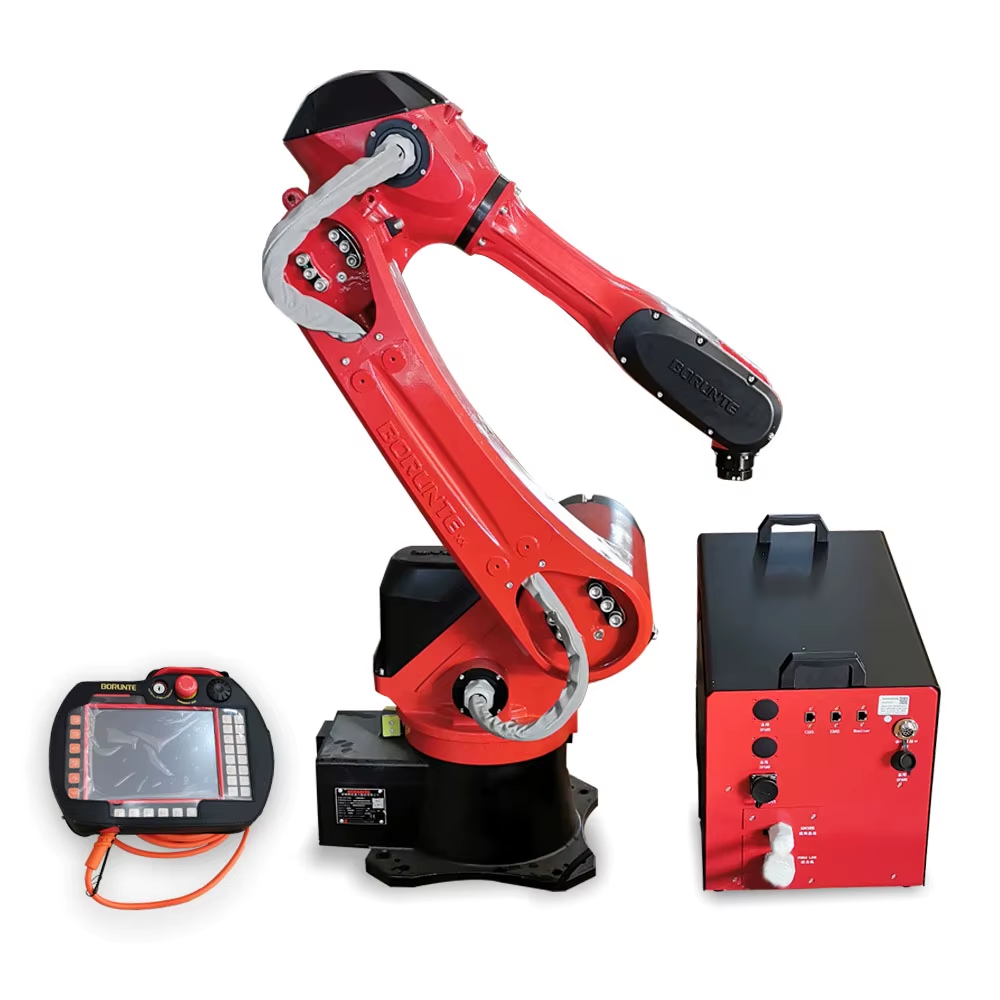
A robotic arm repeats the same motion thousands of times without fatigue, which is why factories keep adding them to welding, handling, and assembly lines.
How a Contract Manufacturer Filled a Labor Gap
When a robotic arm Took Over a Risky Welding Line
A contract manufacturer in the Midwest struggled to staff a welding cell that ran hot, loud, and repetitive. Turnover stayed high, and quality swung with whoever was on shift. The plant installed a six-axis robotic arm with a welding torch and a positioner, then reprogrammed the cell around it. Within two months, first-pass yield on the welded frames climbed past 95%, and the human welders moved to fixturing and inspection, where their judgment mattered more.
The change was not about replacing people. It moved them to work that suited them and let the machine absorb the monotonous, hazardous passes.
The Gains Beyond Raw Speed
Throughput rose, but the quieter win was consistency. A robotic arm does not tire at hour eight, so the last part equals the first. Scrap from inconsistent welds dropped, and downstream grinding time fell with it. Energy use per part improved because the cell ran without the stops and starts of manual changeovers. The manufacturer also gained scheduling predictability, since output no longer depended on who called in sick.
What Makes an Industrial Arm Work
Axes, Payload, and Reach
An industrial arm earns its flexibility from articulated joints. Six axes cover most spatial tasks; fewer suit simpler pick-and-place. Payload is the mass the arm can carry at full reach without losing accuracy, and reach defines the workspace envelope. Undersizing either forces slow, cautious moves that erase the speed advantage. A robotic arm sized with margin runs smoother and lasts longer than one pushed to its limit every cycle.
End Effectors, Sensors, and Control
The arm is only half the system; the gripper or tool at the flange does the work. Vacuum cups, two-finger grippers, and welding torches each suit different parts. Modern arms pair servo motors with encoders reporting position thousands of times per second, holding repeatability often within ±0.02 mm. A robotic arm guided by machine vision can locate parts that are not perfectly placed, which removes precise fixturing and speeds changeovers between products.
Selecting and Deploying Safely
Matching the Arm to the Real Task
Buyers should map the actual cycle: part weight, required reach, and the precision the process demands. A robotic arm built for palletizing may lack the stiffness for precise machining. Consider the floor footprint and how the cell integrates with existing conveyors or presses. Request a demonstration on the buyer's own part, not a showroom token. Integration cost, including fixtures and safety, often exceeds the arm's price, so budget for the cell, not just the robot.
Safety, Training, and Upkeep
Robots are powerful and unforgiving, so safety engineering comes first. ISO 10218 and the ANSI/RIA R15.06 standard define requirements for fences, interlocks, and emergency stops. A robotic arm inside a guarded cell needs a risk assessment before anyone powers it on. Train operators on the teach pendant and lockout procedures, and service bearings, cables, and reducers on the maker's schedule. A maintained arm keeps its repeatability; a neglected one drifts into scrap.
A robotic arm earns its place when the task is repetitive, precise, or risky for people. The strongest deployments pair the machine with trained staff and an honest risk assessment, then measure output against the baseline they replaced. Choosing with margin, integrating as a cell, and maintaining on schedule turn a capital purchase into steady, predictable capacity.
Frequently Asked Questions
What industries use a robotic arm most?
Automotive, electronics, and metal fabrication lead, but food packaging, pharmaceuticals, and logistics adopt them fast. A robotic arm fits any task that is repetitive, precise, or unsafe for people. Welding, machine tending, palletizing, and assembly are common. The deciding factor is cycle consistency: when quality depends on repeating one motion perfectly, automation pays.
How many axes does an arm need?
Most industrial tasks use six axes, which let the wrist reach almost any orientation in the workspace. Simple pick-and-place may need only three or four. More axes add flexibility but also cost and programming complexity. An arm with the minimum axes that meets the job is usually the smarter buy, since extra degrees of freedom rarely pay back on a fixed, well-defined cycle.
What does payload really mean?
Payload is the mass the arm can hold at full extension while keeping its stated accuracy, including the tool and any part. Exceeding it slows the arm and wears reducers early. A robotic arm rated for the heaviest expected part, with margin, runs cooler and holds tolerance longer. Buyers should add the end effector weight to the part weight before comparing specifications.
Which safety standards apply?
ISO 10218 covers industrial robot safety, and ANSI/RIA R15.06 is its North American counterpart. They address fences, interlocks, emergency stops, and risk assessment. An arm in a collaborative mode also falls under ISO/TS 15066. Compliance is not paperwork alone; it shapes cell design. Ignoring these standards risks injuries and failed audits, so they belong in the plan from day one.
Can a robotic arm handle varying part positions?
Yes, when paired with machine vision or flexible fixturing. An arm with a camera locates parts on a conveyor and adjusts its path, removing the need for precise placement. Without vision, parts must arrive in known positions. Vision adds cost and programming, but for mixed batches it removes changeover delays and keeps the cell running through product variety.
When does maintenance become critical?
Maintenance matters most after the initial service period ends, when wear begins to show. Reducers, cables at the joints, and bearings degrade with cycle count. An arm on a preventive schedule keeps its repeatability and avoids sudden stoppages that idle a line. Logging cycle counts and inspecting cables quarterly catches problems before they become scrap or collisions, protecting both output and the capital invested.