
 EN
Upfront Investment: What Small Manufacturers Really Pay for a Car Welding Robot
Core hardware, fixtures, safety enclosures, and integration labor
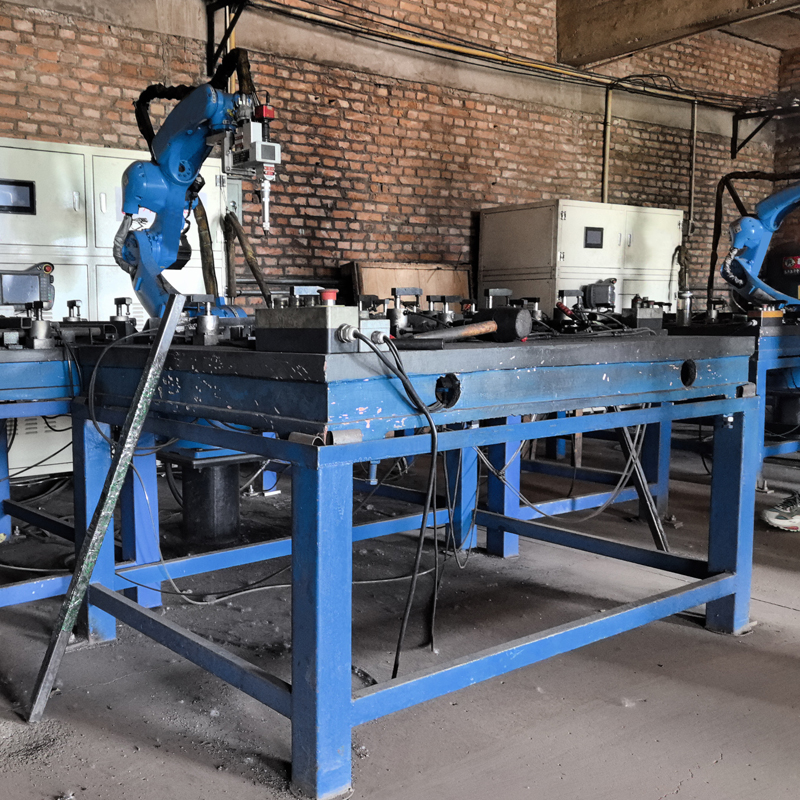
A turnkey car welding robot cell typically costs between $175,000 and $250,000 (2025 industry estimates), with full-scope setups for automotive components exceeding $300,000 when specialized tooling is required. The robot arm accounts for 30–40% of the total—entry-level manipulators start near $28,000, while high-speed arc welding models reach $60,000. The welding power source, wire feeder, and torch add $15,000 to $30,000. Custom fixtures and positioners—critical for repeatable part locating—range from $20,000 to $50,000; safety enclosures with light curtains or fencing require $10,000 to $25,000. Integration labor—including mechanical installation, PLC programming, weld-parameter tuning, and safety validation—typically equals 20–30% of equipment cost. Small manufacturers with limited in-house engineering must budget for an integrator’s field-service days, documentation, and startup support. Even at the low end, a simple cobot-based welding station with basic tooling and no external axis rarely falls below $60,000 once all ancillaries are included.
Hidden SME cost drivers: legacy line retrofitting and limited in-house engineering capacity
Small manufacturers often discover that the headline robot price is only half the real commitment. Retrofitting a legacy welding line commonly demands floor reinforcement, upgraded electrical service, additional compressed-air capacity, and high-volume fume extraction—none of which appear in standard quotes. Together, these facility modifications can add $15,000 to $40,000 before production restarts. Limited in-house engineering forces shops to rely on third-party integrators for process design and troubleshooting, increasing both cost and timeline risk. Training operator-programmers consumes two to four weeks of reduced throughput, and annual maintenance contracts absorb another 5–10% of the capital expense. Subtler factors—such as part-tolerance variability requiring upstream stamping improvements or added inspection stations—compound quickly. In lean SME environments where a single engineer wears multiple hats, underestimating these integration-stage expenses is the most common reason initial ROI forecasts prove far too optimistic.
Annual Net Benefits: Labor Efficiency, Quality Gains, and Throughput Consistency
Labor optimization: reduction vs. strategic redeployment (upskilling, retention, indirect task absorption)
A car welding robot transforms—not replaces—the labor dynamic. Skilled welders shift from repetitive, ergonomically taxing tasks to higher-value work like programming, quality inspection, and process improvement. This reduces turnover—often 15% or more in manual welding shops—and preserves institutional knowledge. Rather than eliminating positions, robots absorb overflow during peaks, freeing human welders for complex, low-volume jobs requiring judgment. Industry experience shows a single robot can cover the equivalent of 1.5 to 2 full-time welders when accounting for overtime reduction (commonly 15–30%) and indirect task absorption. Training costs drop as new hires focus on robot operation and basic maintenance instead of mastering manual welding finesse—reducing onboarding expense by thousands per employee. Ultimately, labor savings stem from maximizing workforce potential, increasing per-employee output, and building a more resilient team.
Avoided costs from rework, scrap, and overtime — plus contribution of stable cycle times to on-time delivery
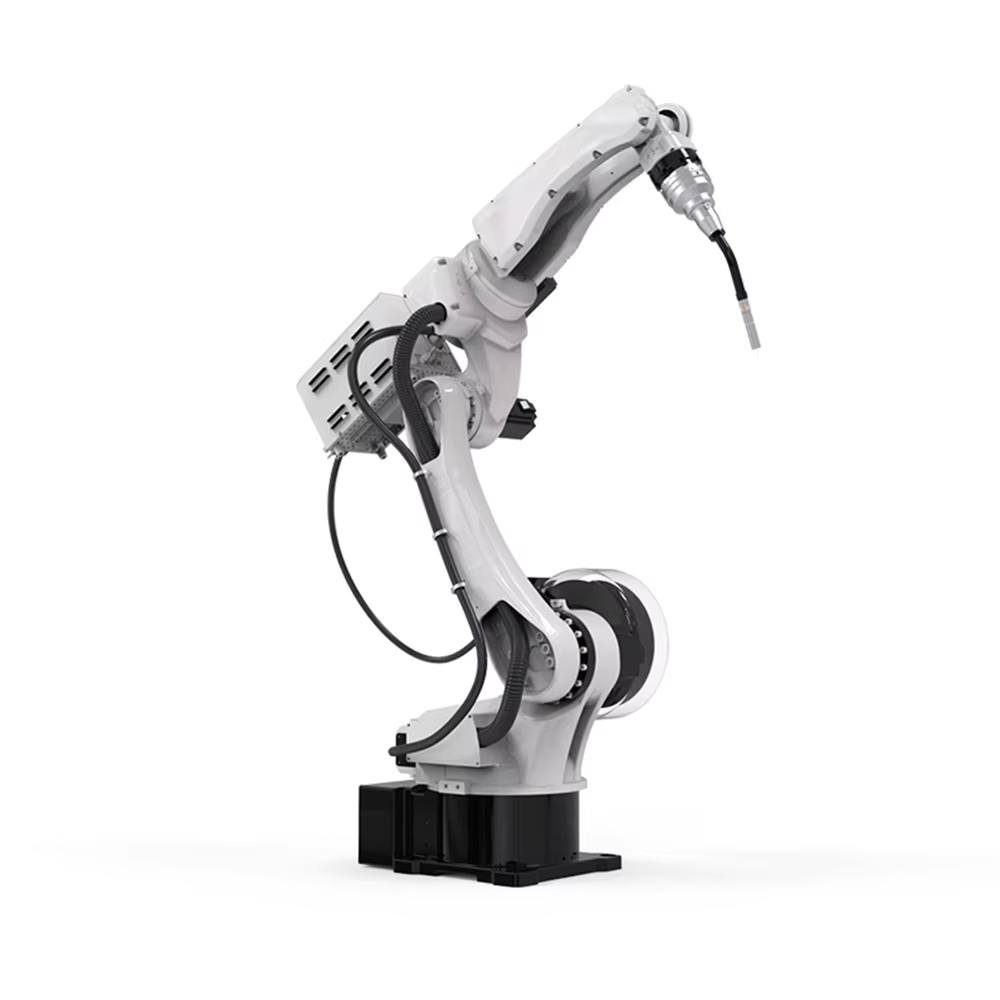
Car welding robots deliver repeatable arc starts, torch angles, and travel speeds that cut scrap rates by 30–80% and reduce dimensional variance by 30–70%, according to manufacturing benchmarks. Fewer defective parts mean less grinding, re-welding, and material waste—direct cost savings that compound. Consistent quality also lowers warranty claims and customer returns, protecting margins. Overtime expenses shrink as cycle times stabilize; a robot welds at a constant pace, unaffected by fatigue, cutting overtime hours by 15–30% in many small shops. More critically, stable cycle times enable better production scheduling. When each part emerges within a predictable window, downstream assembly and inspection queues flow smoothly, boosting on-time delivery rates. For small manufacturers, meeting delivery promises strengthens customer trust and secures repeat orders. The combination of higher first-pass yield, reduced scrap, and predictable throughput enhances financial health beyond labor savings.
Real-World Utilization: Measuring True Capacity and Avoiding Common ROI Pitfalls
True ROI on a car welding robot hinges on how many good parts actually exit the cell per shift—not the theoretical maximum printed in the spec sheet. Shops that base payback calculations solely on arc-on time routinely overestimate real-world throughput by 30–40%.
Measuring actual vs. theoretical output: loading, welding, inspection, and rework cycle time baselines
A robot may cycle a weld in 45 seconds, yet a complete part interval often exceeds 90 seconds when manual loading, clamping verification, and post-weld visual checks are included. Industry studies show that non-welding tasks—part handling, tip dressing, and mandatory in-process inspections—account for nearly half of the cell cycle time. Small manufacturers that track only the welding segment therefore miss the largest time consumers. Establishing baselines for each activity reveals a real output typically 55–70% of the robot’s nameplate capacity. Without these real-world figures, ROI projections become fiction, and capacity promises that look attractive on a spreadsheet fail to materialize during a three-shift production run.
Top 3 overestimation traps: changeover penalties, upstream part shortages, and downstream inspection bottlenecks
Even accurate cycle baselines can be undermined by three hidden drains that small shops frequently underestimate:
- Changeover penalties – Frequent part-number switches add fixturing changeout, program recalls, and first-article verification, eating 12–18% of available time. A line running five variants daily may lose more capacity to changeover than to weld defects.
- Upstream part shortages – Robotic cells idle when preceding stamping or bending stations fall behind. A missing bracket or mis-fed panel can stall output for 20–40 minutes, eroding utilization rates and creating labor idle-time costs.
- Downstream inspection bottlenecks – When post-weld gauging or coordinate measuring machine stages can’t keep pace, finished parts accumulate. This forces robots into wait states, reducing effective hourly throughput and distorting the net capacity used in payback calculations.
ROI Calculation Framework for Small Manufacturers: Leasing, Cobots, and Sensitivity Testing
SME-tailored car welding robot ROI model with utilization and part-mix sensitivity analysis
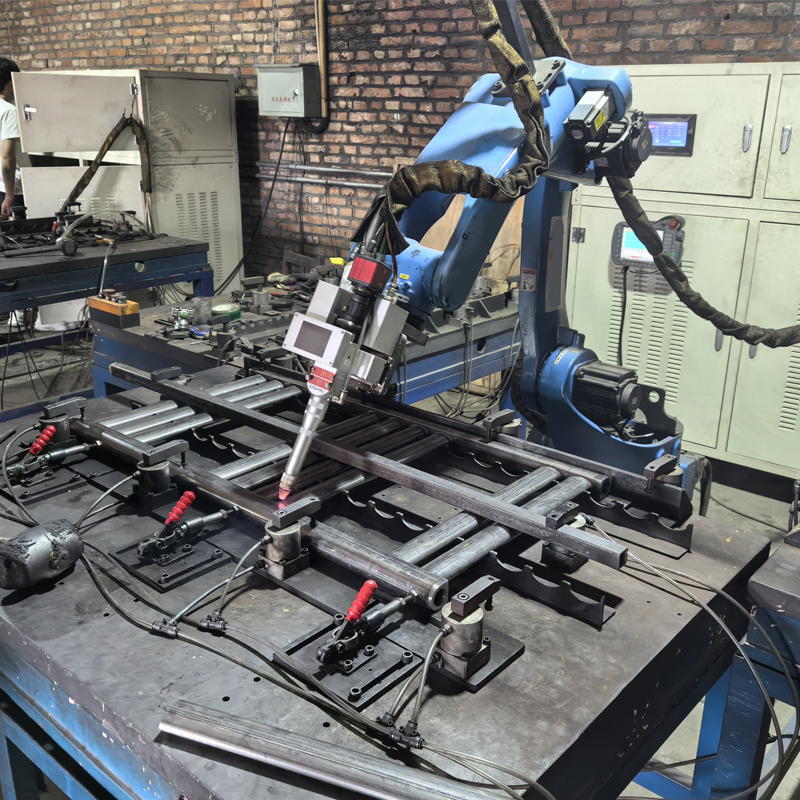
A practical ROI model for a small manufacturer must account for two critical variables often ignored in standard calculators: true utilization and part-mix volatility. A simple framework compares annualized net benefits against total upfront investment. The annual net benefit is the sum of labor efficiency gains (redeployed or reduced), scrap and rework avoidance (typically 3–5% of total production cost), and throughput consistency value. This sum is then divided by the total system cost—hardware, tooling, safety infrastructure, and integration—to derive a raw payback period.
The model’s real power emerges through sensitivity testing. If utilization drops from a planned 85% to a more realistic 65%, the annual net benefit shrinks proportionally, extending the payback period by months or even a full year. A table illustrates this impact clearly:
| Utilization Rate | Annual Net Benefit ($) | System Cost ($) | Payback (Years) |
|---|---|---|---|
| 85% | 42,000 | 75,000 | 1.8 |
| 65% | 32,000 | 75,000 | 2.3 |
| 50% | 24,700 | 75,000 | 3.0 |
Part-mix sensitivity is equally vital. A shop running three part numbers with short changeovers sees a dramatically different ROI than one welding 20 part numbers with 30-minute changeover penalties. The model should adjust cycle time assumptions and scrap rates for each part number, weighting them by their production volume. Building this weighted average prevents a single high-volume, high-margin part from masking losses on other jobs, delivering a net benefit figure that reflects genuine operational reality.
Leasing vs. capex and cobot spot welding as a lower-risk entry point with comparative payback timelines
Financing structure transforms the risk profile for a small manufacturer. A traditional capital expenditure model demands significant upfront cash, but leasing converts this to a predictable monthly operating expense. A typical lease might require $0 down with payments structured over 36–60 months. This preserves working capital for raw materials or other production needs. While the total cost of leasing is higher over the asset’s life, it provides an immediate, cash-flow-positive scenario if the monthly net benefit from the robot exceeds the monthly lease payment. Payback, in this context, can be instantaneous from a cash perspective.
A cobot spot welding system presents a lower-risk technical and financial entry point. These systems are often priced from $50,000 to $100,000 fully integrated, compared to $100,000 to $250,000+ for a traditional industrial robot with hard safety enclosures. Their redeployability is a key financial advantage: a cobot on a mobile base can be moved between different part families in minutes, directly mitigating the changeover penalty and low-utilization risks that cripple ROI calculations. For a small shop, starting with a leased cobot on a stable, high-volume part family can achieve a cash payback timeline measured in months—not years. This allows the team to build programming skills and process validation before committing to a larger, dedicated automation cell, using the cash flow from the first success to fund future growth.
FAQ
How much does a car welding robot cost?
The cost of a turnkey car welding robot cell typically ranges between $175,000 and $250,000, with entry-level cobot-based systems available for as low as $60,000.
What are some hidden costs in integrating a car welding robot?
Hidden costs include facility modifications such as floor reinforcement, upgraded electrical service, and compressed-air capacity. Additionally, limited in-house engineering can lead to higher integration and troubleshooting expenses.
How do car welding robots improve labor efficiency?
Car welding robots allow skilled welders to focus on higher-value tasks such as programming and quality inspection while reducing turnover and indirect task absorption.
What are the biggest ROI pitfalls for car welding robots?
Common ROI pitfalls include overestimating theoretical capacity, underestimating changeover penalties, and overlooking upstream part shortages or downstream bottlenecks.
What is the benefit of leasing a car welding robot?
Leasing reduces the upfront financial burden, converting the investment into a predictable monthly expense. This approach is especially advantageous for small manufacturers aiming for immediate cash-flow-positive operations.
Table of Contents
- Upfront Investment: What Small Manufacturers Really Pay for a Car Welding Robot
- Annual Net Benefits: Labor Efficiency, Quality Gains, and Throughput Consistency
- Real-World Utilization: Measuring True Capacity and Avoiding Common ROI Pitfalls
- ROI Calculation Framework for Small Manufacturers: Leasing, Cobots, and Sensitivity Testing
- FAQ