
 EN
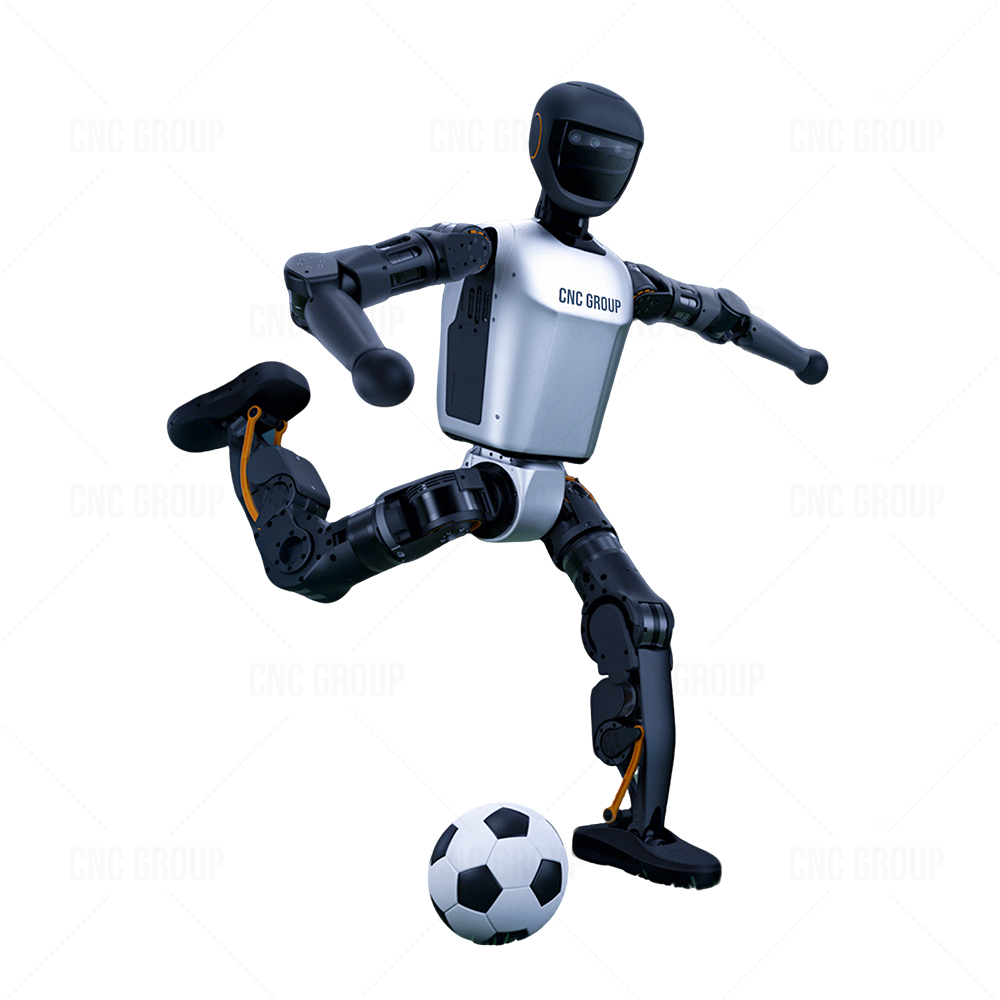
Why Robots That Look Like Humans Enhance Human-Robot Interaction
Facial expressiveness and gesture fidelity reduce cognitive load in collaborative settings
Robots that look like humans reduce cognitive load in collaborative settings by aligning facial expressions, gaze, and gestures with the social cues people read automatically. Research indicates that 45% of communication content is conveyed through non-verbal channels (Scientific Reports 2025). When a humanoid robot signals attention through a slight head tilt or confirms a task with an open palm, workers spend less mental effort interpreting mechanical states. Congruent expression and gesture fidelity make turn-taking smoother, reduce repeated instructions, and prevent hesitation in shared workspaces. In one automotive plant, cobots with natural language processing and emotive displays monitored safety, offered suggestions, and politely requested help—boosting productivity and fostering team cohesion. Employees even formed emotional attachments to their robot co-workers (Knepper et al. 2017). By mirroring familiar human signals, the interface becomes intuitive rather than learned—a critical advantage in high-tempo or safety-critical tasks, where a missed cue can cascade into delay or injury.
The trust-uncanny valley tradeoff: when human likeness builds rapport—and when it triggers discomfort
Human likeness can build trust—but only within a narrow band. As resemblance increases, familiarity grows—until subtle mismatches in motion, voice, or skin texture trigger unease: the uncanny valley (Mori et al. 2012). A humanoid that looks almost real but moves with delayed kinetics or avoids natural eye contact can feel more disturbing than a clearly mechanical robot. Empirical studies show people hesitate or respond negatively to such designs more often than to pet-like or utilitarian robots (Austermann et al. 2010). The issue isn’t human features themselves—it’s the gap between appearance and expected behavior. When facial expression, gesture, and speech align, rapport deepens; when they diverge, users may unconsciously reject the robot. Designers should therefore treat human likeness as an interaction tool—not an aesthetic goal. The most effective humanoid robots remain legible, predictable, and socially coherent, prioritizing functional alignment over perfect mimicry.
Functional Benefits of the Humanoid Form Factor
Seamless operation in human-centric environments: stairs, door handles, and standardized workspaces
Robots that look like humans operate more easily in spaces built for people. Most workplaces, homes, and public buildings follow human-centered design: step heights, door handle positions, counter depths, and corridor widths all assume bipedal, upright operators with two arms and an eye-level sensor line. A humanoid robot can climb stairs, turn lever handles, and pass through standard doorways without retrofitting—unlike wheeled or box-shaped systems, which stall at the first step or narrow threshold. This compatibility reduces environmental modification costs and accelerates integration. In recent logistics pilots, humanoid test units navigated multi-floor facilities using staircases and standard elevators—cutting pilot setup time and supporting faster scaling.
Tool versatility and physical task execution—from folding laundry to lifting 20kg autonomously
The hands and arms of a humanoid robot reduce tooling friction across dynamic workflows. A humanoid hand can use the same screwdriver, drill, or scanner that a person uses—eliminating the need for custom grippers or fixtures. That flexibility matters when tasks change daily. In care settings, a single robot may fold soft fabrics, place a cup, and open a drawer—all in one shift. Folding laundry is especially demanding: it requires visual recognition of deformed cloth, low-force gripping, and gentle placement—challenges well-suited to bimanual, dexterous manipulation. For heavier work, several current prototypes demonstrate autonomous lifting of 20 kg boxes from floor to table height. Whole-body balance—not just arm strength—makes this possible. This versatility enables one platform to support multiple roles: restocking, kitting, or mobility assistance—all via software updates.
High-Impact Applications of Robots That Look Like Humans
Healthcare: telepresence, empathetic companionship, and mobility support (social companion and telepresence robots)
Healthcare teams deploy humanoid systems where clinical accuracy alone is insufficient. Socially assistive designs use facial expressions, arm gestures, and voice tone to sustain patient engagement. In a 2026 multi-site evaluation across eight elder-care facilities, humanoid companions reduced loneliness by 18–22%. Telepresence units enabled specialists to conduct remote ward rounds while preserving nonverbal cues—enhancing diagnostic confidence and continuity of care. Mobility support now extends beyond static exoskeletons: semi-humanoid assistants can hold walking frames, detect posture changes, and summon help when a patient sways. These robots interpret head orientation and voice prosody in real time to adjust tone and responsiveness—providing emotionally aware presence between human visits, not replacement.
Hazardous operations: nuclear decommissioning and disaster response (bipedal emergency response prototypes)
In hazardous settings, the humanoid form factor is an operational necessity—not a stylistic choice. Nuclear facilities, collapsed buildings, and chemical spills contain valves, ladders, and corridors designed for human dimensions. Bipedal prototypes tested in 2026 field trials navigated stairwells, turned industrial valves, and carried 10 kg sensors through dust and unstable rubble. In one nuclear-site trial, a teleoperated humanoid completed repeated valve rotations without manual reset. Leg-based locomotion lets them step over debris that stalls wheeled or tracked robots, while dual manipulators enable tool transfer without returning to base. Reliability remains the key constraint: falls, battery limits, and communication lag still require human teleoperation. Even so, these platforms are shifting from choreographed demos toward supervised autonomy in high-risk inspection and response.
Bridging the Gap: From Demo-Ready to Deployment-Ready Robots That Look Like Humans
Robots that look like humans often impress in staged videos—walking, dancing, or sorting boxes under controlled lighting. Deployment-ready systems must deliver consistent performance for months in variable, unstructured environments. This gap is not primarily about gross movement—it hinges on durability, energy management, safety certification, and autonomous error recovery. A 2025 industry assessment notes that many current humanoids still rely on teleoperation, scripted routines, or tightly constrained task environments. Replicating human hand dexterity remains especially difficult, requiring fine tactile control and heavy industrial force in the same system. Until actuators, sensors, and power systems mature, field reliability will lag behind lab demonstrations.
Economics are improving—but not yet resolved. Forecasts from 2025 suggest humanoid robots could approach cost parity with human labor within five years—assuming meaningful gains in uptime, repair cycles, and unsupervised operation. A robot that undercuts hourly wages but fails on an assembly line every few shifts introduces hidden labor and safety costs. The market remains early: investor enthusiasm is high, yet scalable commercial deployment is still limited.
| Demo-ready capability | Deployment-ready requirement |
|---|---|
| Controlled lighting and flat floors | Variable lighting, dust, stairs, and uneven terrain |
| Teleoperated or scripted tasks | Autonomous task recovery and long-duration operation |
| Single-task demonstrations | Multi-shift, multipurpose work with measurable uptime |
| Lab safety performance | Certified safety in shared human spaces |
Closing the gap requires shifting success metrics—from video engagement to mean time between failures, field repair speed, and total cost per completed task. That transition will determine whether robots that look like humans evolve into general-purpose workers—or remain impressive prototypes.
FAQ Section
Why do robots that look like humans enhance human-robot interaction?
Humanoid robots enhance interaction by mirroring human social cues, such as facial expressions and gestures. This reduces cognitive load and makes the interface intuitive, especially during high-tempo or safety-critical tasks.
What is the uncanny valley, and how does it affect human-robot interaction?
The uncanny valley refers to discomfort triggered when a robot looks almost human but exhibits unnatural behaviors. Designers aim to balance human likeness with functional alignment to minimize unease and build rapport.
How do humanoid robots benefit environments designed for humans?
Human-like robots can navigate human-centric spaces such as stairs, doorways, and standardized workspaces without retrofitting. This speeds up their integration and reduces modification costs.
What are some applications of humanoid robots in healthcare?
Humanoid robots in healthcare provide telepresence for remote diagnostic care, empathetic companionship to reduce loneliness, and mobility support for patients.
What challenges do humanoid robots face in deployment?
Challenges include durability, energy management, safety certification, and autonomous task recovery. Current designs are advancing, but many still rely on teleoperation or scripted routines.
Table of Contents
- Why Robots That Look Like Humans Enhance Human-Robot Interaction
- Functional Benefits of the Humanoid Form Factor
- High-Impact Applications of Robots That Look Like Humans
- Bridging the Gap: From Demo-Ready to Deployment-Ready Robots That Look Like Humans
-
FAQ Section
- Why do robots that look like humans enhance human-robot interaction?
- What is the uncanny valley, and how does it affect human-robot interaction?
- How do humanoid robots benefit environments designed for humans?
- What are some applications of humanoid robots in healthcare?
- What challenges do humanoid robots face in deployment?