
 EN
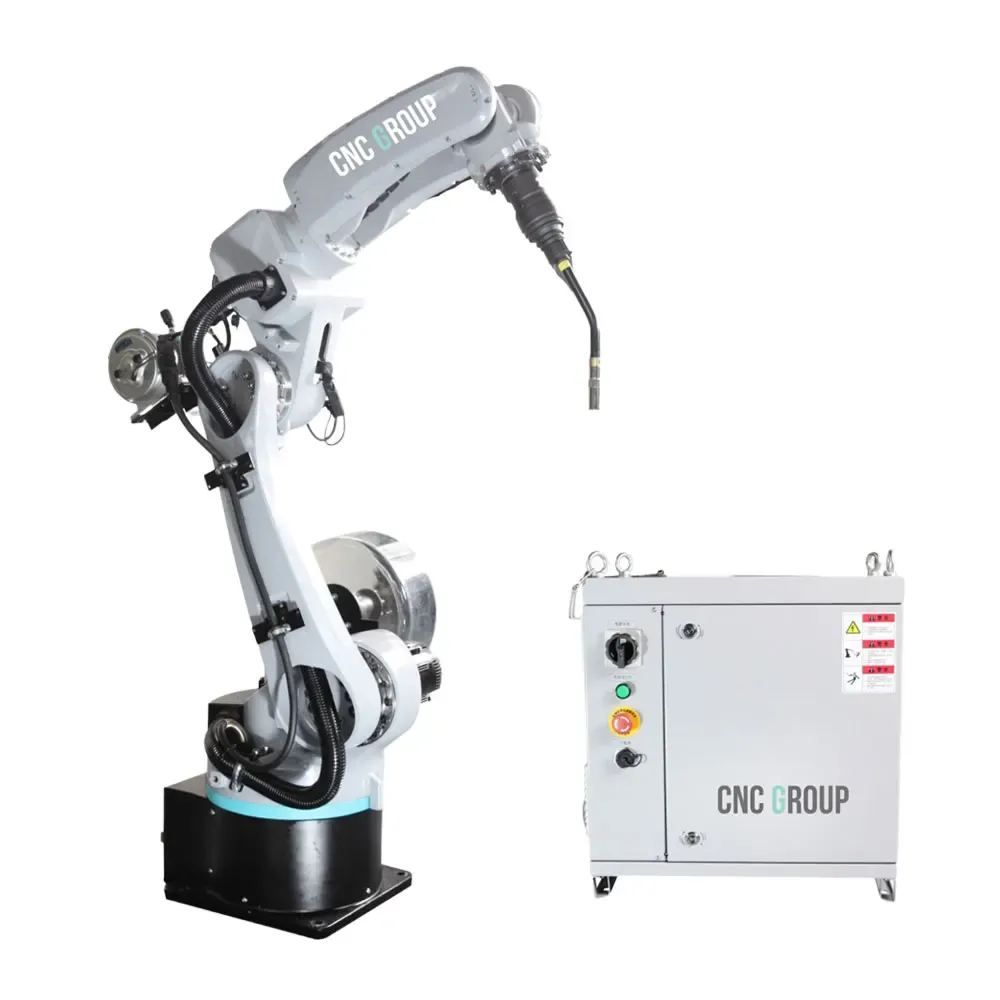
Robotic arm welding fails in predictable ways, and most stoppages trace back to the consumable, the ground, or the calibration rather than the robot itself. A contract fabricator in Ohio lost a whole morning to arc interruptions on a cell that had welded clean the day before. Robotic arm welding rewards a calm fault tree: check the cheap parts first, read the alarm, and only then question the program. That order saved the shift and the customer shipment.
A Plant Stops the Arc Interruptions
When the Bead Kept Breaking Mid-Seam
Cellula cadit arcum omni paucis partibus, relinquens breves frigidas lapsus quos inspicere in fine lineae deprehendit. Soldatura bracchii robotici pendet a constante distantia inter contactum et apicem, et intus ductus iam tantum attritus erat ut filum vagari permitteret. Substitutio intus ductus et repositio distantiæ apicis restituit venam intra unum commutationis tempus, et frigidae lapsus desierunt apparere in armario ante sequentem operationem. Soldatura bracchii robotici etiam notavit numerum defectuum arcus illa matutina, unde attritus intus ductus emersit ut tendentia non ut subita sorpresio. Soldatura bracchii robotici quæ hunc defectuum numerum observat etiam indicat planneri quando intus ductus reponere oporteat, ita ut sequens attritus subitus numquam fiat instantanea ordinatio diei.
Calibratio Errans Quæ Omnes Fefellit
A secund fault resembled a program error: the seam deviated half a millimeter from the joint by Friday. Robotic arm welding repeated the same taught path, but the robot had drifted from its last calibration, so the path no longer matched the fixture. A quick reference check confirmed the drift, the arm was re-zeroed, and the seam landed true without touching the saved program or the fixture. Robotic arm welding that repeats a drifted path looks correct on the screen, which is why a reference check beats a guess. Robotic arm welding on a Friday drift is easy to misread as a fixture problem, so the reference check protects both the program and the tooling from needless rework.
What Goes Wrong First
Wire Feed Jams and Poor Ground
Plurimi defectus in soldatura per bracchium roboticum incipiunt in via fili. Un tubus flexus, un rullus de tractatio usque ad finem, aut un apex de contactu ultra suum tempus causat retrocombustionem et arcum inconstans. Un clamp de terra malus est classicus silentium: resistentia crescit, arcus vagatur, et soldatura videtur bona in unum partem et aspera in alterum. Verifica connexionem de terra et apex ante accusare fontem de potentia aut robotem. Soldatura per bracchium roboticum quae incipit unumquemque diem cum verificatio de terra evitat plerumque istos falsos allarmes in area.
Collisione de torcia et accumulatio de spatter
A bumped torch or a stack of spatter changes the tool-center-point, so the bead sits proud or misses the seam. Robotic arm welding should run a collision check after any crash, because the arm may still repeat the path perfectly while pointing at the wrong place. Clear spatter from the nozzle and tip at shift start, and treat a post-crash weld as suspect until a first article proves it true against the fixture. Robotic arm welding that skips this step after a crash is the usual source of a weld that passes the eye yet fails the bend test later in the week.
Reading the Fault Before It Repeats
ISO 9283 Performance and Repeatability Checks
ISO 9283 definit modum mensurandi praecisionem et repetibilitatem positionis robotis, quae est numerus observandus cum iunctura aberrat. Solderatio bracchii robotici manet fidabilis tantum si bracchium repetit intra specificata; ergo examen trimestre secundum methodum ISO 9283 detegit aberrationem antequam ad partem perveniat. Examinatio cito fit comparata ad pretium hebdomadis soldaturarum extra iuncturam quae inspectionem transirent sed tarde ad emendationem perquam tenuem.
Registra Allarum et Tractus Primi Articuli
Bona cellula omnes allas cum temporis notula et programma soldaturae in usu annotat. Solderatio bracchii robotici has annotationes in indicem praecocem convertit: crescentis numerus allarum defectus arcus ad ductum vel ad terram ante defectum guttae indicat. Si annotatio coniungitur cum examinatione primi articuli ad singulas mutationes, defectus in datis apparet, non in reditu a cliente post hebdomades in molo. Solderatio bracchii robotici quae annotationem cum imagine primi articuli coniungit qualitati limpidam viam auditivam praebet, quam clientes saepius postulant dum regulae de traciabilitate severiores fiunt.
Optima Practica in Solum
Ritualis Hebdomadarius ad Problema Solvendum
Consumere quindecim minuta singulis hebdomadibus in rebus quae maxime deficiunt. Armus roboticus ad soldandum manet sanus dum linea, apex et terra percutiuntur in die certo, non dum arcus interrumpitur mediis turnis. Perambula vestem cavi pro punctis attritionis, verifica fluxum gas, et perlustra diarium alarum pro tendentia. ANSI/RIA R15.06 exigit ut stationes securitatis probentur secundum programmam, ideo illas in eundem ritum inserere oportet. Armus roboticus ad soldandum manet vilius ad administrandum dum quindecim minuta in calendario statuuntur, quia defectus quos detegit unam horam singuli constare solent postquam arcus interrumpitur mediis turnis.
Consumabilia, Calibratio et Institutio
Keep a consumables kit at the cell and log every tip and liner change with the part count. Robotic arm welding drifts fastest when a worn part is run past its life, so change on a count, not on a failure. Re-zero the arm on the ISO 9283 cadence, train operators to read the alarm rather than reset it blind, and NFPA 79 with IEC 60204-1 keep the electrical side safe during any service call. Robotic arm welding also improves when operators learn to read the alarm text, since a blind reset hides the trend that the log was built to show.
Quaestiones Frequenter Rogatae
Why does robotic arm welding lose the arc mid-seam?
Robotic arm welding usually loses the arc from a worn liner, a spent contact tip, or a poor ground that raises resistance. The wire wanders and the arc drops. Check those cheap parts and the ground clamp first, then read the alarm log, before questioning the saved program or the power source on the cell.
How often should a welding robot be calibrated?
Calibrate on a fixed cadence, such as quarterly against ISO 9283, or after any crash and re-zero. Robotic arm welding repeats the taught path, so a drifted arm points at the wrong place while looking correct. A quick reference check catches it before off-joint welds reach inspection or the customer line.
What causes spatter and a proud bead?
Spatter and a proud bead come from a changed tool-center-point after a crash or from a clogged nozzle and tip. Robotic arm welding should run a collision check and a first-article after any bump, because the arm may repeat perfectly while the torch sits proud. Clear spatter at shift start to stay on the seam.
Which standards guide robotic welding troubleshooting?
ISO 9283 covers robot performance measurement, AWS D1.1 covers steel weld acceptance, and ANSI/RIA R15.06 with ISO 10218 cover safety. NFPA 79 and IEC 60204-1 guide electrical service, while OSHA 29 CFR 1910.252 adds welding ventilation and fire rules during any fault work on the cell.
Can a poor ground really ruin robotic arm welding?
A poor ground clamp is the classic silent fault in robotic arm welding: rising resistance makes the arc wander, so the weld looks fine one part and rough the next. Check the ground connection and resistance monthly, because a bad ground fools everyone into blaming the robot or the program first.
What weekly check prevents most stoppages?
Spend fifteen minutes on liner, tip, ground, gas flow, and the alarm log, plus the safety-stop test per ANSI/RIA R15.06. Robotic arm welding stays healthy when those cheap parts are checked on a fixed day. Log every consumable change with a part count so wear stays predictable, not surprising mid-shift.