
 EN
EN
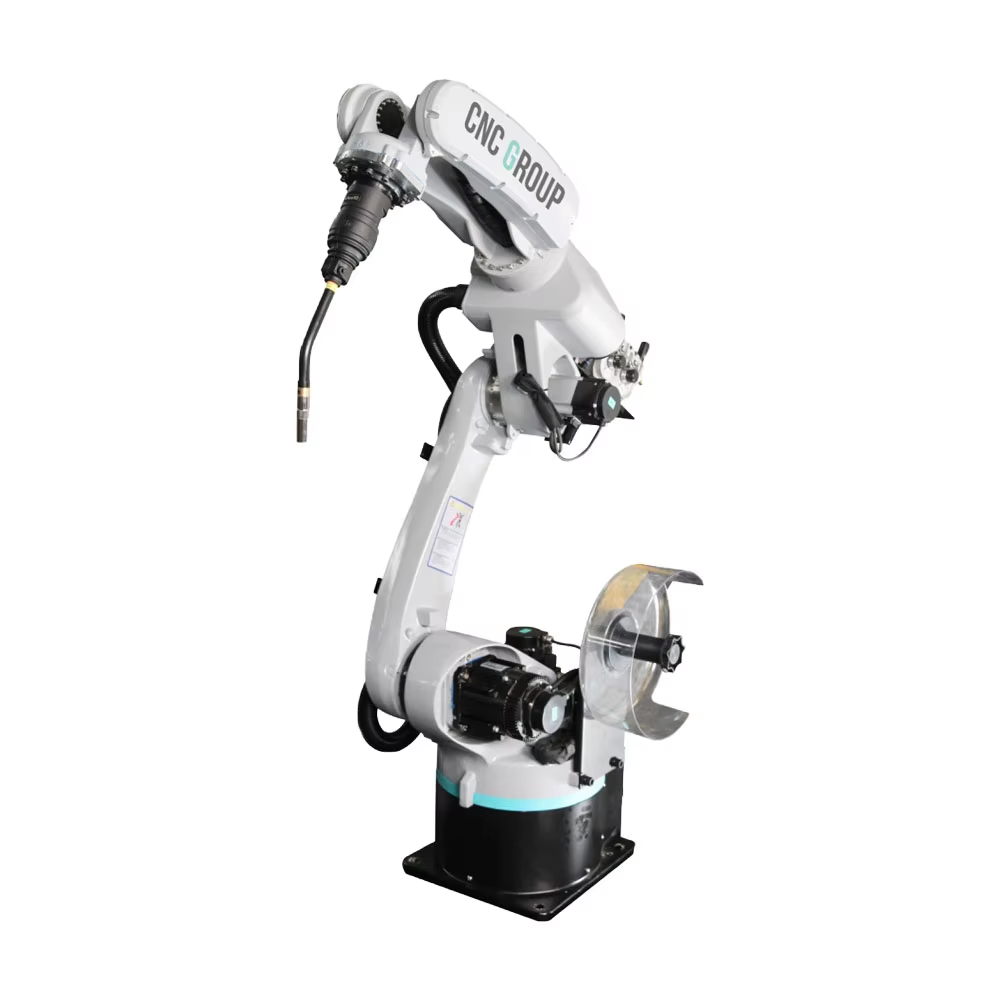
Robotic Welding Technology: Solving Efficiency Issues
Robotic welding technology turns the weld from a hand skill into a controlled process, locking arc parameters and path so throughput stops depending on who holds the gun. A metal furniture fabricator in Poland ran a bent-tube frame on two manual stations and missed shipment dates every spring. Robotic welding technology let the shop build the same frame on one cell at a steady rate, and the bottleneck moved from welding to powder coat instead of sitting on the floor.
A Fabricator Beats the Bottleneck
From Overtime to a Balanced Cell
The shop paid weekend overtime to clear the weld queue, and the cost ate the margin on small orders. Robotic welding technology arrived as a single cell with a turntable and a MIG torch, and the frame welded in under three minutes versus the nine minutes a skilled hand needed. Robotic welding technology also balanced the line so powder coat, not welding, became the constraint, and one operator loaded while the cell ran, so the queue cleared inside the normal shift and the overtime line disappeared from the schedule. Robotic welding technology also freed the certified welder for the tricky one-off frames that still needed a hand, so the shop stopped turning away custom work.
A Thin-Gauge Job That Stopped Burning Through
A 1.2 mm leg bracket kept blowing holes under manual pulse settings that varied by feel. Robotic welding technology held the pulse timing and travel speed exactly, so the puddle stayed controlled and the burn-through rate fell from rough one in ten to near zero. The same schedule ran on every bracket, which let quality sign off the setup once instead of inspecting each part by eye on the line. Robotic welding technology held that consistency through the full spring rush, when manual fatigue used to push the burn-through rate back up by the third week.
Where Efficiency Leaks Away
Rework and Scrap From Inconsistent Arc
Manual welding drifts with fatigue, and a weak or proud weld means grinding, re-welding, or scrapping the part. Robotic welding technology keeps arc voltage, wire feed, and contact-tip distance inside a narrow band, so the joint forms the same way on part one and part five thousand. Robotic welding technology turns that variation into a logged setpoint staff can audit, and the saving shows up as fewer carts of rework and fewer customer complaints traced back to a cold lap.
Downtime From Manual Changeovers
Every manual changeover resets the gun angle, the settings, and the operator's rhythm, and small jobs lose minutes they never get back. Robotic welding technology stores a named program per part, so a changeover is a recipe pick rather than a re-learn. The cell also logs alarms, so a drifting parameter surfaces in data before it becomes a stack of bad parts on the rack. Robotic welding technology also made the cell easy to share between shifts, because the next crew opens the named program instead of decoding the last operator's settings.
What Robotic Welding Technology Actually Controls
Adaptive Control and Pulsed MIG
Robotic welding technology reads arc signals through the wire feed and power source, then trims the pulse to match the joint as it goes. Pulsed MIG transfers a controlled droplet per pulse, which cools thin stock and limits spatter on galvanized surfaces. Robotic welding technology that watches the arc this closely also trims gas use, because the pulse repeats instead of surging, and when seam tracking sees a gap the controller shifts the path instead of burning past it.
Offline Programming and Digital Twin
Robotic welding technology rehearses a new part on a virtual cell before the torch strikes steel, so the first physical piece lands near the target path. A digital twin mirrors the real cell's cycle and faults, which helps plan throughput and spot a worn dress before it causes a miss. ISO 3834 expects procedure qualification and traceability, and a logged program gives quality a searchable record when a customer audit arrives weeks later. Robotic welding technology that plans on a twin also shortens the learning curve for a new part, because the path is proven virtually before steel and scrap time stays low.
Applying the Technology on the Floor
How to Specify Sensors and Tracking
Match the sensing to the joint: through-arc tracking suits clean fillets, while laser or vision tracking handles wider gaps and reflective edges. Robotic welding technology should ship with the tracking mode proven on the real alloy, because reflective steel fools a cheap sensor. Confirm the controller logs the weld schedule and the alarms, and ask for a first-article report so the efficiency claim is tied to a measured part, not a brochure figure. Robotic welding technology should also arrive with a spare dress and a documented torch angle, because the first failure on a new cell is rarely the robot and almost always the consumable.
Check, Calibrate and Maintain the System
At commissioning, verify the robot calibration and the torch angle against the saved program, and test the safety stops per ANSI/RIA R15.06. Robotic welding technology needs a daily check of gas flow, wire tension, and nozzle, plus a monthly check of ground resistance, since a poor ground is the silent cause of arc instability. NFPA 79 and IEC 60204-1 guide the cell's electrical design, and OSHA 29 CFR 1910.252 covers the welding ventilation and fire rules that keep the bay safe. Robotic welding technology rewards a simple board where the tip, liner, and contact tip are logged with part counts, so a worn part is changed on schedule instead of after a spatter storm.
Frequently Asked Questions
What is robotic welding technology in plain terms?
Robotic welding technology is the set of controls, sensors, and programs that turn welding into a repeatable automated process instead of a hand skill. It locks arc parameters and path, reads the joint as it goes, and logs every run. The payoff is steady throughput and fewer bad parts, not just a faster gun on the line.
How does robotic welding improve efficiency?
Robotic welding technology removes the per-part variation that drives rework and the changeover time that eats small jobs. Named programs make a swap a recipe pick, and logged alarms catch drift before scrap builds. The cell runs extra shifts from the same schedule, so volume scales without adding certified welders to the shift.
Which standards apply to automated welding cells?
ISO 3834 covers weld quality systems, AWS D1.1 covers steel acceptance, and ANSI/RIA R15.06 with ISO 10218 cover robot safety. NFPA 79 and IEC 60204-1 guide electrical design, while OSHA 29 CFR 1910.252 adds ventilation and fire rules. Compliance starts with a documented risk assessment for the cell.
Does robotic welding technology suit thin gauge material?
Robotic welding technology handles thin gauge with pulsed MIG, which cools the puddle between droplets to stop burn-through. Adaptive control holds the pulse timing exactly, so a 1.2 mm bracket welds the same on every part. The key is proving the schedule on the real alloy before the cell ships to the floor.
What sensors does a welding robot need?
Match the sensor to the joint: through-arc tracking for clean fillets, laser or vision for wide gaps and reflective edges. Robotic welding technology should arrive with the tracking mode proven on the actual material, because a cheap sensor misreads shiny steel. Logged schedules and alarms turn the data into a maintenance signal.
How is a robotic welding cell maintained?
Check gas flow, wire tension, and nozzle daily, and clear spatter early. Run a monthly calibration and ground-resistance check, and log every torch change. NFPA 79 and IEC 60204-1 frame the electrical care, while a simple consumables log keeps mean time between failures predictable across the week.